There is a specific, intoxicating aroma that defines the streets of Beirut at dusk—the smell of Lebanese Kafta hitting a white-hot grill. This isn’t just a ground meat kebab; it is a masterclass in balancing rich, fatty proteins with the bright, herbaceous punch of fresh parsley and the deep, citrusy tang of sumac-dusted onions.
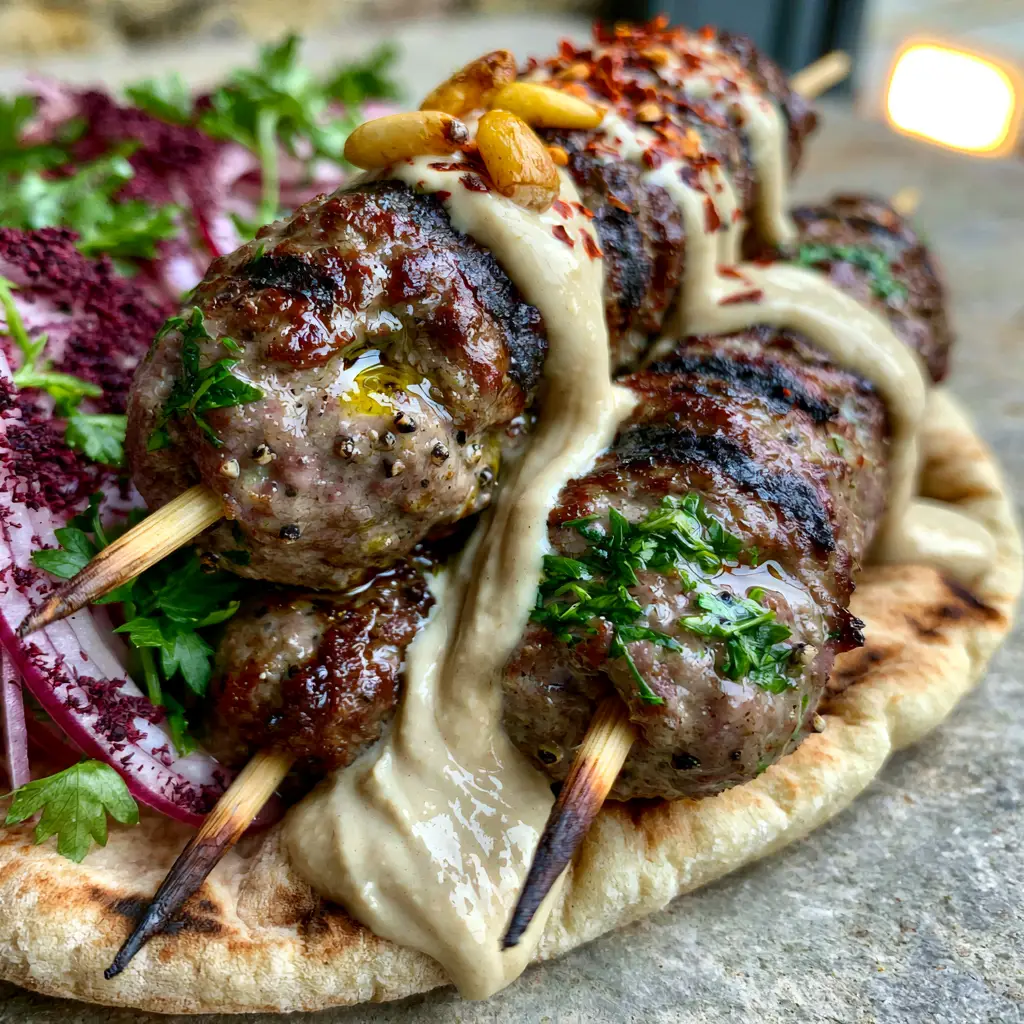
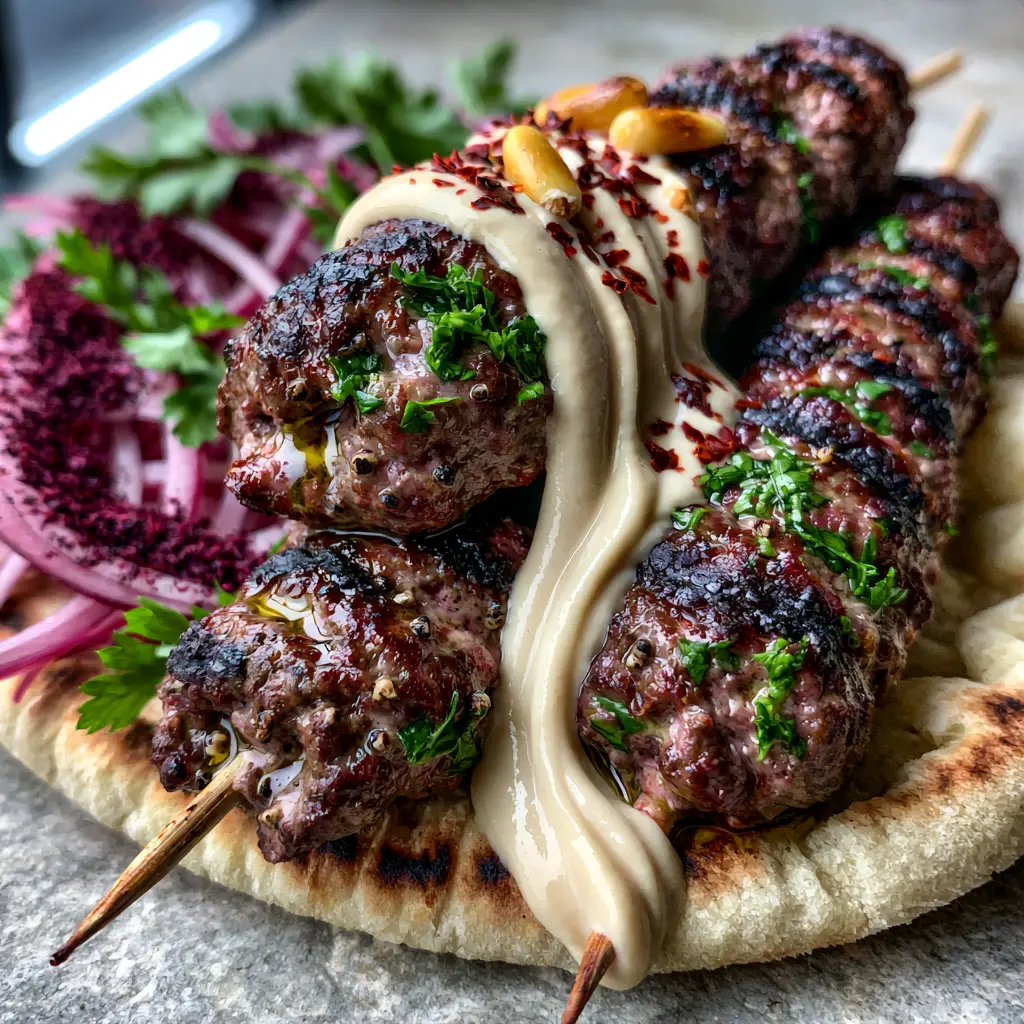
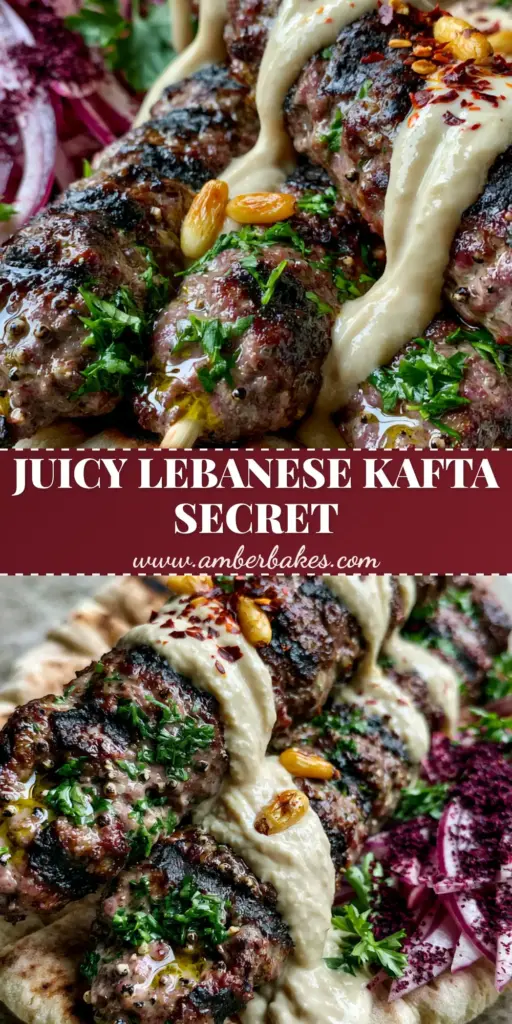
In this guide, we are recreating the exact visual perfection of a high-end Lebanese grill: three succulent skewers resting on charred pita, glistening with natural juices, and draped in a velvety, ivory-colored tahini sauce. Every element, from the golden toasted pine nuts to the visible flecks of cracked black pepper, is designed to create a multi-sensory experience in your own kitchen.
Whether you are a seasoned griller or a home cook looking to master Middle Eastern aromatics, this Lebanese Kafta recipe delivers restaurant-quality results. We will focus on the culinary science of meat binding to ensure your skewers never fall apart, while achieving those iconic dark grill marks and a succulent interior.
The Visual Cue Checklist: Why This Lebanese Kafta Stands Apart
- The Glisten Factor: We utilize an 80/20 fat ratio and a light olive oil sheen to ensure the meat looks as juicy as it tastes.
- Textural Contrast: The crunch of toasted pine nuts against the velvety tahini drizzle creates a professional-grade mouthfeel.
- Charred Perfection: Specific heat management techniques guarantee deep, dark sear marks without drying out the center.
- Herbaceous Vibrancy: Finely chopped parsley isn’t just a garnish; it’s a primary structural ingredient that provides bright green flecks throughout the charred beef.
- The Sumac Bridge: Thinly sliced red onions dusted in burgundy sumac provide the essential acid hit to cut through the richness of the beef.
The Flavor Foundation: Essential Aromatics and Proteins
Lean Ground Beef (80/20 Mix): 1.5 lbs (680g). For that authentic glistening juice and structural integrity, a slightly higher fat content is required to prevent the meat from becoming crumbly or dry under high heat.
Fresh Flat-Leaf Parsley: 1 cup (30g), very finely chopped. This provides the “bright green flecks” mentioned in our visual blueprint and adds a fresh, peppery undertone that defines authentic Lebanese Kafta.
Yellow Onion: 1 small (100g), grated and squeezed dry. Grating the onion releases its juices, which must be squeezed out via a cheesecloth to ensure the meat mixture remains tacky enough to cling to the skewers.
Lebanese Seven Spice (Baharat): 1 tbsp (7g). This “invisible” foundation includes cinnamon, allspice, and cloves, providing the warm, aromatic soul of the dish without overpowering the beef.
Cracked Black Pepper & Kosher Salt: 1 tsp (2g) pepper and 1.5 tsp (9g) salt. Large-grain cracked pepper ensures those “tiny specks” are visible on the seared surface, while salt denatures the meat proteins for a better bind.
Creamy Tahini Paste: 1/2 cup (120ml). This forms the base of our ivory-colored drizzle, offering a nutty, rich contrast to the charred meat.
Sumac: 1 tbsp (8g). A deep burgundy spice made from dried berries, essential for the vibrant red onion salad that accompanies the skewers.
Toasted Pine Nuts: 2 tbsp (20g). These provide the “golden” visual highlights and a buttery crunch that elevates the dish from a simple meal to a gourmet experience.
Red Pepper Flakes: 1/2 tsp (1g). A final sprinkle of heat that adds a pop of color and a subtle tingle to the finish.
Precision Tools for the Perfect Sear
To achieve the “vertical extreme close-up” quality of this dish, you will need a heavy-duty cast-iron grill pan or an outdoor charcoal grill. The thermal mass of cast iron is essential for creating those “dark grill marks” that signify a professional Lebanese Kafta.
You will also need stainless steel flat skewers. Unlike round wooden skewers, flat metal skewers prevent the meat from spinning when you flip them, ensuring an even sear on all sides and maintaining the “three skewers” presentation style.
Finally, a high-quality chef’s knife is non-negotiable for the “finely chopped” parsley and “thin-sliced” red onions. The precision of these cuts directly impacts the final visual aesthetic and the distribution of flavor.
The Step-by-Step Architecture of Lebanese Kafta
1. Preparing the Meat Matrix
In a large glass bowl, combine the ground beef, finely chopped parsley, and the grated onion (ensure all liquid has been squeezed out). Add the Lebanese Seven Spice, salt, and the cracked black pepper, which should be clearly visible against the red meat.
Use your hands to knead the mixture for 3-4 minutes. This isn’t just mixing; you are developing the myosin in the meat, which creates a tacky texture that allows the Lebanese Kafta to grip the skewers without falling off during the sear.
2. Forming the Signature Skewers
Divide the meat into equal portions, roughly the size of a large lemon. Thread the meat onto the flat skewers, pressing firmly to create a long, uniform cylinder about 1 inch (2.5cm) thick.
Lightly brush each skewer with olive oil. This is the secret to the “natural juices and light olive oil sheen” that creates those gentle highlights in the finished photo.
3. Achieving the Perfect Char
Heat your grill or cast-iron pan over medium-high heat until it is wisps of smoke begin to rise. Place the skewers down and do not move them for at least 3 minutes; this allows the “dark grill marks” to set firmly.
Rotate the skewers 90 degrees and cook for another 3 minutes. The meat should feel firm to the touch and be glistening with rendered fat—this is the visual cue that the interior is juicy and fully cooked.
4. The Sumac Onion & Tahini Finishing Touches
While the meat rests, toss the thin-sliced red onions with a generous dusting of burgundy sumac and a handful of parsley. The onions should take on a vibrant, stained appearance that pops against the neutral grey background.
Whisk the tahini with lemon juice and a splash of water until it reaches a “rich and velvety texture.” It should be thick enough to “cascade over the skewers” rather than running off like water.
Expert Tips for Culinary Success
- Cold Meat is Key: Keep your meat mixture chilled until the moment it hits the grill. Cold fat creates better steam pockets, resulting in a juicier Lebanese Kafta.
- The Squeeze Test: If your grated onions are too wet, the skewers will steam rather than sear. Use a kitchen towel to wring out every drop of moisture.
- Rest Before Serving: Let the skewers rest on the warm pita for 3 minutes before adding the tahini. This allows the juices to redistribute and soak into the bread.
- Toast the Pine Nuts: Always toast your pine nuts in a dry pan for 2 minutes until golden. This awakens the oils and provides the “toasted golden” look required for the garnish.
The Ideal Middle Eastern Spread: What to Serve
To turn these skewers into a full feast, pair them with Batata Harra (Lebanese Spicy Potatoes) for a crispy, garlicky side. The heat from the potatoes complements the cool tahini drizzle perfectly.
For a lighter option, a Turkish-style potato salad offers a bright, herb-forward alternative that mirrors the sumac notes in the kafta. If you’re hosting a weekend brunch, these skewers can even be served alongside traditional Lebanese breakfast dishes like labneh and olives.
If you enjoy the charred flavors of this dish, you might also want to try our Shish Tawook recipe for a citrusy chicken alternative to the beef kafta.
Frequently Asked Questions
Absolutely. Traditional kafta often uses a mix of beef and lamb (typically 50/50). Just ensure your fat content remains around 20% to maintain that glistening juice and succulent texture.
Preheat your grill pan until it is smoking hot before adding the skewers. This allows the exterior to sear instantly. Use a high heat for the first 3 minutes per side, then reduce slightly to finish the interior.
The meat skewers themselves are naturally gluten-free as long as you use pure spices. To keep the whole meal gluten-free, serve the kafta with a fresh salad or rice instead of the traditional pita bread.
You can make a quick substitute by mixing equal parts ground cinnamon, allspice, cloves, nutmeg, coriander, and cumin. This provides the warm, aromatic profile essential for authentic flavor.
This usually happens if the meat hasn’t been kneaded enough to develop the protein bind, or if the onions were too wet. Ensure you squeeze all liquid from the onions and mix the meat for at least 4 minutes until it feels tacky.
The Master Lebanese Kafta Recipe
Lebanese Kafta: The Secret to Juicy, Charred Beef Skewers Every Time
Ingredients
Equipment
Method
- In a large bowl, knead ground beef, parsley, grated onion, and spices for 4 minutes until a tacky protein bind forms.
- Thread meat onto flat metal skewers, creating 1-inch thick cylinders. Lightly brush with olive oil for a glistening sheen.
- Place skewers on a preheated grill pan over medium-high heat. Cook for 3 minutes per side until dark grill marks appear.
- Rest meat on charred pita. Drizzle with creamy tahini and garnish with sumac onions, toasted pine nuts, and red pepper flakes.
Notes
Always use 80/20 beef for maximum juiciness and 'glistening' visual appeal.
Closing & Call to Action
Mastering the Lebanese Kafta is a journey into the heart of Mediterranean grilling. With its perfect balance of charred exterior and succulent interior, this dish is guaranteed to become a staple in your dinner rotation. The combination of creamy tahini, zingy sumac onions, and those buttery pine nuts creates a flavor profile that is truly world-class.
Did you achieve those perfect grill marks? We want to see your results! Leave a comment below with your experience or tag us in your photos. Don’t forget to save this recipe to your favorite board on Pinterest so you can find it the next time the craving for authentic Lebanese flavors hits!