Experience the soul of the Levant with these vibrant Lebanese Breakfast Dishes, a spread that transforms the first meal of the day into a communal celebration of flavor and texture. From the earthy aroma of toasted za’atar to the silkiness of olive-oil-drenched yogurt, this breakfast is a sensory masterpiece. Whether you are hosting a weekend brunch or seeking a nutritious start to your day, these traditional staples offer a balance of protein, healthy fats, and complex carbohydrates.
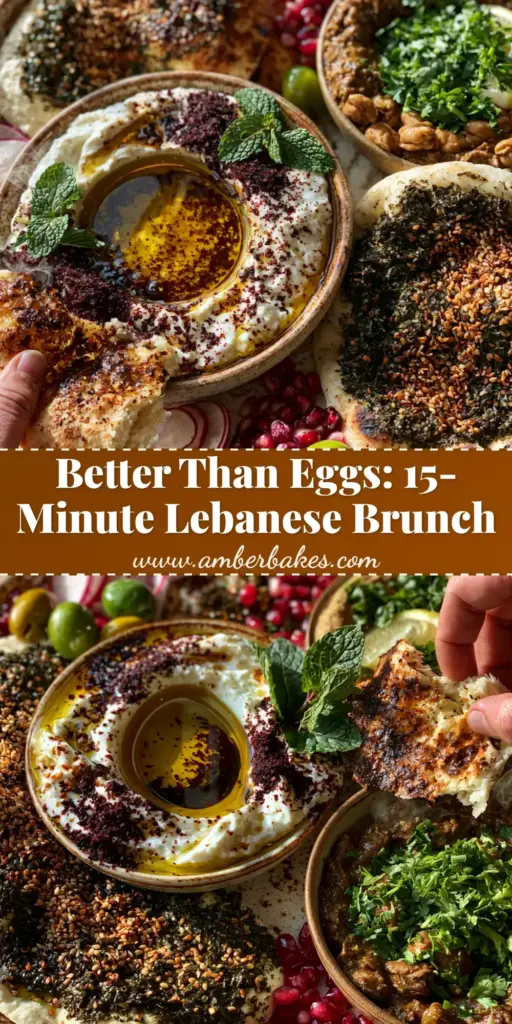
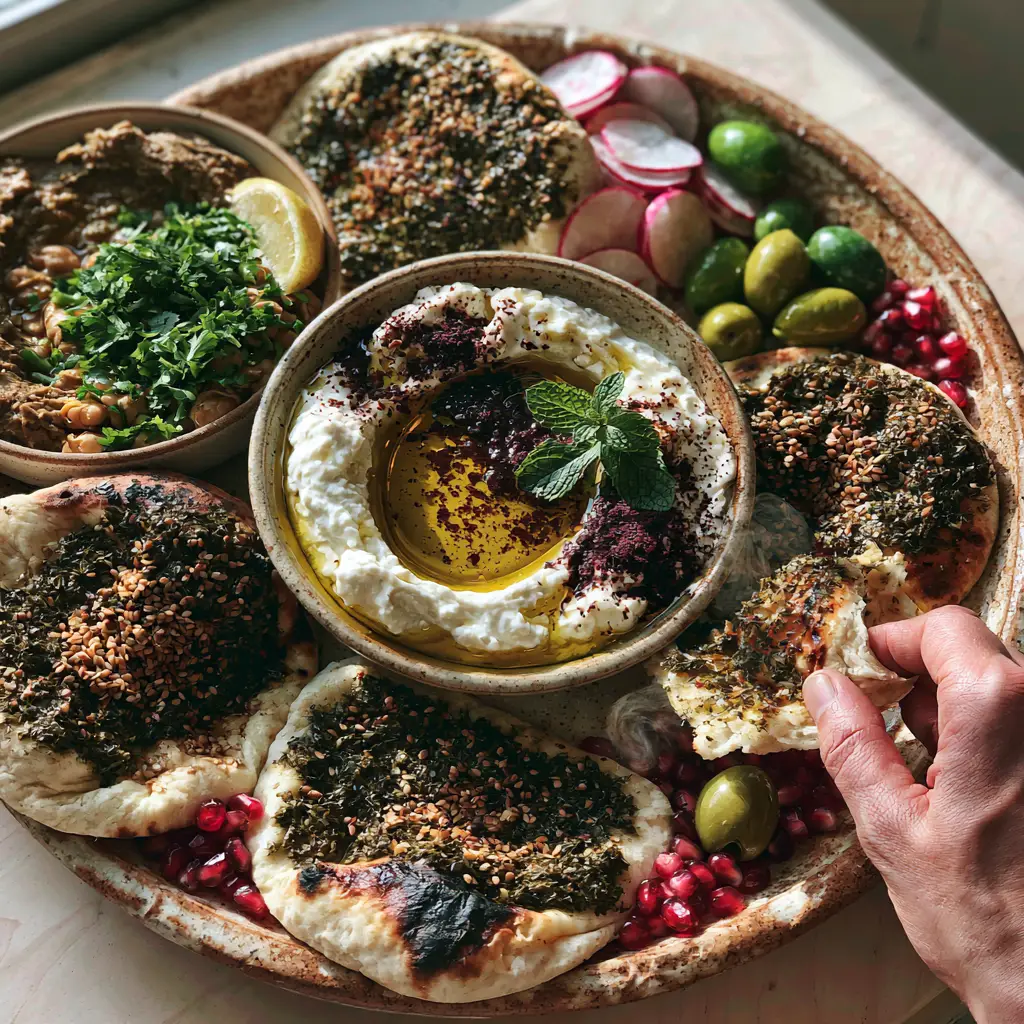
The beauty of Lebanese Breakfast Dishes lies in the contrast: the heat of charred flatbread against the coolness of crisp radishes, and the rich, slow-simmered beans brightened by a sharp squeeze of fresh lemon. In this guide, we will break down the three pillars of the spread—Manakish, Labneh, and Foul Mudammas—so you can recreate this high-end lifestyle aesthetic in your own kitchen. Imagine the soft, diffused morning sunlight hitting a platter filled with ruby red pomegranate seeds and glossy green olives as you pull away a piece of steaming bread.
Why This Middle Eastern Spread Defines Gourmet Comfort
- Textural Harmony: Enjoy the interplay between soft, warm manakish dough and the “snap” of fresh, crisp sliced radishes.
- Nutrient Density: This meal is packed with fiber-rich fava beans, probiotic-heavy labneh, and heart-healthy extra virgin olive oil.
- Visual Vibrancy: The dark red sumac and bright green mint provide a stunning contrast against the creamy white labneh, making it a feast for the eyes.
- Pro-Level Aromatics: The scent of wild thyme (za’atar) and toasted sesame seeds baking in the oven creates an irresistible kitchen atmosphere.
The Essential Pantry for Authentic Lebanese Breakfast Dishes
Foundational Dough & Herbs
Za’atar Herb Blend: This is a mix of dried wild thyme, sumac, and toasted sesame seeds. It provides the signature earthy, tangy flavor profile that defines the manakish topping.
All-Purpose Flour: 3 cups (375g) of flour provides the structural base for our soft, pliable flatbreads. We use a touch of sugar to feed the yeast and ensure a golden-brown char.
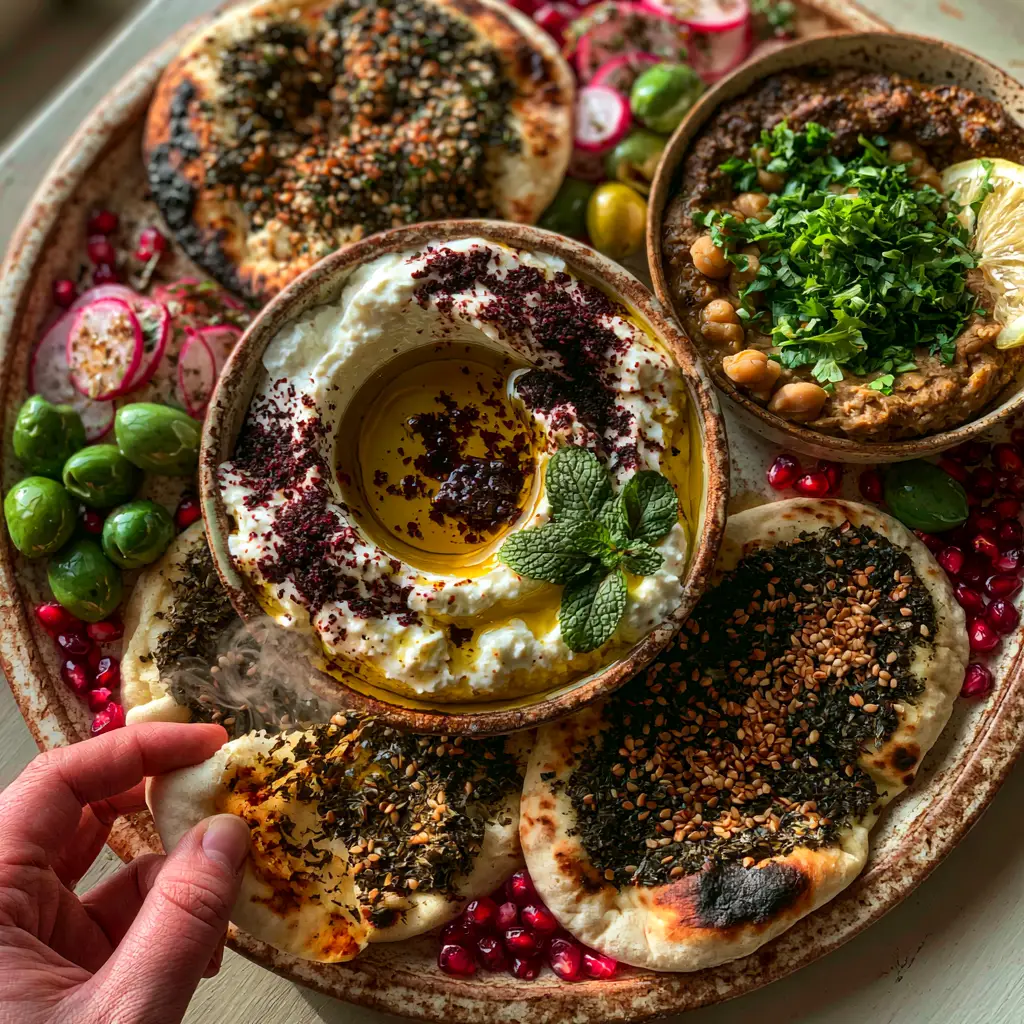
Active Dry Yeast: 2 tsp (7g) is necessary to achieve that light, airy interior within the toasted flatbread. It creates the “steam” visible when the bread is torn open.
Creamy Dairy & Savory Legumes
Full-Fat Greek Yogurt: 2 cups (480g) will be strained to create the thick, spreadable labneh. The high fat content is crucial for that velvet-smooth mouthfeel seen in the visual blueprint.
Canned or Soaked Fava Beans: 2 cups (440g) of beans form the heart of the Foul Mudammas. These are slow-simmered until they are tender enough to be partially crushed.
Extra Virgin Olive Oil: You will need 1/2 cup (120ml) of high-quality, golden oil. It acts as both a cooking medium and a finishing “well” in the center of the labneh bowl.
Vibrant Garnishes & Seasonings
Fresh Lemon Juice & Garlic: 2 tbsp (30ml) of juice and 2 cloves of minced garlic brighten the earthy fava beans. These acids cut through the richness of the olive oil.
Sumac & Fresh Mint: These are your visual and flavor finishers. Sumac adds a deep red hue and citrusy punch, while mint leaves provide a cooling aromatic lift.
Pomegranate Seeds & Radishes: 1/4 cup (40g) of seeds and 4-5 sliced radishes add the necessary “crunch” and ruby-red sparkle to the final platter.
Professional Tools for the Perfect Mezze Spread
To achieve the “smartphone photo” quality results, you will need a fine-mesh sieve and cheesecloth for straining the labneh. A heavy-bottomed skillet or Dutch oven is essential for slow-simmering the fava beans to a buttery consistency. For the manakish, a baking stone or preheated heavy baking sheet will help you achieve those characteristic charred edges. Finally, a wooden citrus reamer ensures you get every drop of fresh lemon juice into the beans.
Step-by-Step Evolution of a Lebanese Breakfast
Crafting the Hand-Stretched Za’atar Manakish
Start by blooming your yeast in 1 cup (240ml) of warm water with a pinch of sugar. Once foamy, mix with the flour, 1 tsp (6g) salt, and 2 tbsp (30ml) olive oil. Knead until smooth and let rise for 1 hour until doubled in size.
Divide the dough into small balls and roll into 6-inch circles. Mix 4 tbsp (30g) of za’atar with 3 tbsp (45ml) of olive oil to create a dark green paste. Spread the paste generously over the dough, leaving a small border. Bake at 450°F (230°C) for 8-10 minutes until the edges show a slight char and the sesame seeds are toasted.
Straining the Velvet Labneh Yogurt
Mix your Greek yogurt with 1/2 tsp (3g) of sea salt. Line a sieve with cheesecloth and pour the yogurt in, gathering the edges to form a bundle. Let this sit in the refrigerator for at least 6 hours, or ideally overnight.
Once thickened to a cream-cheese consistency, spread the labneh into a rustic ceramic bowl. Use the back of a spoon to create a deep well in the center. Pour in a generous amount of golden olive oil, then sprinkle with the dark red sumac and top with fresh mint leaves for that professional “centerpiece” look.
Simmering the Earthy Foul Mudammas
Place your fava beans in a small pot with a splash of water. Simmer over low heat for 10-15 minutes. As they soften, use a fork to partially crush about half of the beans—this creates a thick, luxurious sauce for the whole beans to sit in.
Stir in the minced garlic, lemon juice, and a pinch of cumin. Transfer to a bowl and top with a mountain of bright chopped flat-leaf parsley and another drizzle of olive oil. The result should be earthy, brown, and incredibly fragrant.
Final Platter Assembly & Garnishing
Arrange the warm manakish and the bowls of labneh and foul on a large wooden or ceramic platter. Scatter the crisp sliced radishes, whole green olives, and ruby red pomegranate seeds across the empty spaces. This “scattered” look is the key to the minimalist, high-end lifestyle aesthetic. Serve immediately while the bread is still releasing steam.
Expert Tips for a Flawless Breakfast Plating
- Oil Temperature: Never heat the olive oil used for finishing. High-quality extra virgin olive oil loses its delicate floral notes if exposed to high heat; keep it raw for the labneh well.
- The “Well” Technique: When plating labneh, rotate the bowl while holding the spoon steady to create a perfectly circular, deep trough for the oil.
- Bean Consistency: If the Foul Mudammas looks too dry, add a tablespoon of the bean canning liquid or warm water. It should be “saucy” but not a soup.
- Radish Crispness: Soak your sliced radishes in ice water for 10 minutes before serving to make them extra crunchy and vibrant.
Storage, Reheating, and Make-Ahead Advice
Lebanese Breakfast Dishes are best enjoyed fresh, but you can prepare components in advance. The labneh can be strained and kept in an airtight container for up to 5 days. The manakish dough can be cold-fermented in the fridge overnight for better flavor. If you have leftover manakish, reheat them in a dry skillet over medium heat for 2 minutes to restore the crispness of the crust. Do not microwave the bread, as it will become rubbery.
What to Serve With Your Lebanese Spread
While this spread is a complete meal, it pairs beautifully with other Levantine classics. For a protein-heavy brunch, consider serving alongside grilled Lebanese Kafta or succulent Shish Tawook. If you want more vegetable variety, a side of Spicy Potatoes (Batata Harra) or a tangy Turkish Potato Salad adds excellent contrast. To finish the meal on a sweet note, a plate of ripe mangoes or a light fruit salsa provides a refreshing palate cleanser.
Frequently Asked Questions
Yes, fava beans are often called broad beans. For Foul Mudammas, look for the smaller brown variety (often labeled as ‘Egyptian fava beans’) for the most authentic texture.
Yes, you can use store-bought labneh, but ensure it is a high-quality, full-fat version. Making it at home by straining Greek yogurt allows you to control the thickness and salt level.
Traditional za’atar is not spicy; it is earthy and tangy. However, some regional variations might add red pepper flakes, so always check the label if you are sensitive to heat.
Sumac has a bright, tangy, and slightly astringent flavor profile similar to lemon juice, but with a deeper, earthy floral note and a vibrant red color.
To keep the crust crisp, reheat manakish in a dry skillet over medium heat for 2-3 minutes. Avoid the microwave as it makes the dough soft and chewy.
The Complete Lebanese Breakfast Recipe
Lebanese Breakfast Dishes: The Ultimate Guide to an Authentic Morning Mezze
Ingredients
Equipment
Method
- Mix flour, yeast, water, and oil. Knead until smooth and let rise for 1 hour.
- Top dough circles with za'atar paste and bake at 450°F (230°C) until charred.
- Strain salted yogurt through cheesecloth for 6-24 hours until thick.
- Simmer fava beans with garlic and lemon, partially mashing for texture.
Notes
Soak radishes in ice water for maximum crunch.
Share Your Morning Masterpiece!
Creating these Lebanese Breakfast Dishes is about more than just food; it is about slowing down and enjoying the process of assembly and sharing. We would love to see how your breakfast spread turned out! Did you get that perfect oil well in your labneh? Snap a photo and tag us, or save this guide to your favorite “Morning Recipes” board on Pinterest. Don’t forget to leave a comment below with your favorite Lebanese garnish!