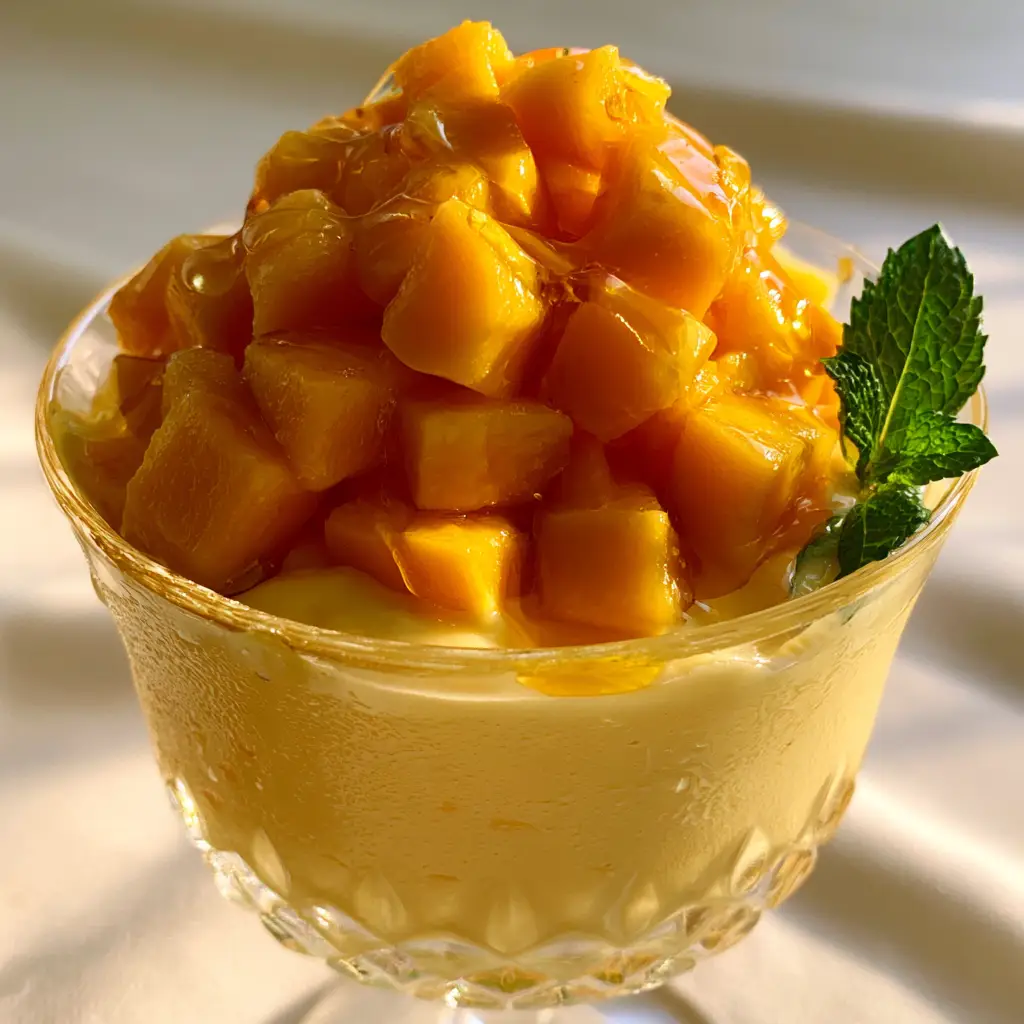
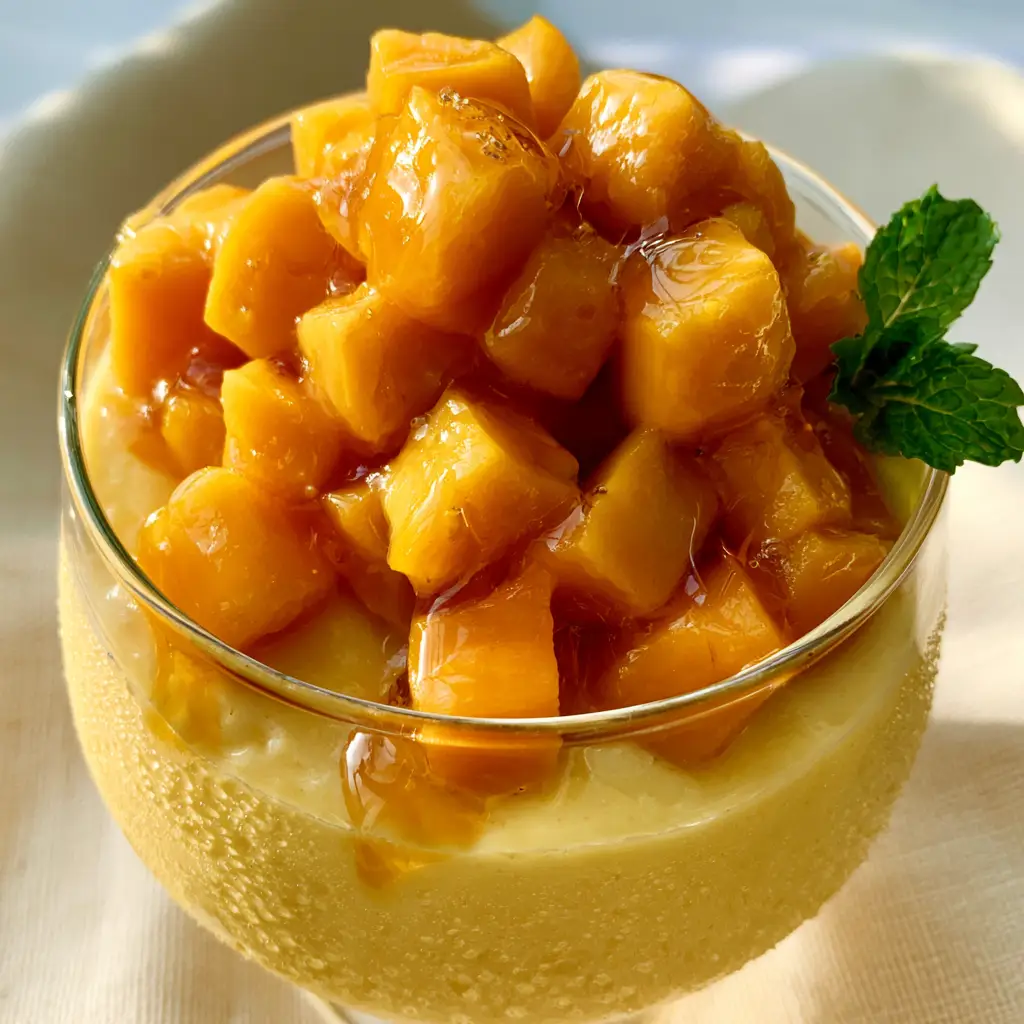
There is nothing quite like the sight of a vibrant, tropical treat catching the soft, warm morning sunlight. This Mango dessert recipe is the ultimate expression of summer, combining the velvety texture of a whipped mousse with the tropical richness of thick coconut cream. Imagine a chilled crystal glass, its exterior kissed by tiny beads of condensation, holding a mountain of juicy, vibrant orange Alphonso mango cubes.
Crafting this dessert is an exercise in sensory delight. From the moment you peel the fragrant mangoes to the final delicate drizzle of golden honey, every step is designed to create a restaurant-quality experience at home. This isn’t just a sweet treat; it is a structural masterpiece of culinary logic and fresh, vibrant flavors.
Whether you are hosting a formal brunch or simply want to elevate your weekend treats, this silky mango mousse stands out. It bridges the gap between sophisticated pastry work and the raw, unadulterated beauty of fresh fruit. Let’s dive into how you can achieve this exact macro-shot-worthy result in your own kitchen.
Why This Vibrant Mango Mousse Is the Ultimate Summer Showstopper
- Unrivaled Silky Texture: By blending high-fiber Alphonso mangoes and folding them into stabilized coconut cream, we achieve a “velvety smooth” base that melts on the tongue.
- Visual Forensics: This recipe is engineered to match the professional aesthetic of diced fruit mountains and honey-glinted surfaces.
- Naturally Dairy-Free: We utilize the high fat content of chilled coconut cream to provide body and richness without the need for heavy dairy.
- Perfectly Balanced Sweetness: The floral notes of the mango are heightened, not masked, by a strategic honey drizzle and fresh mint.
The Anatomy of a Perfect Mango Dessert Recipe: Essential Ingredients
The Foundation: Fresh Alphonso Mangoes
You will need 3 large (approx. 900g) ripe Alphonso mangoes to provide that signature deep orange hue and sweet, non-fibrous flesh. We will use two for the whipped puree and one for the “perfectly diced” mountain on top.
The Aerator: Thick Coconut Cream
1 can (13.5oz / 400ml) of full-fat coconut milk, chilled overnight, is essential for the mousse’s structure. Only the thick, waxy cream from the top is used to ensure the dessert stays stable and doesn’t weep.
The Stabilizer: Cold Water and Gelatin (or Agar-Agar)
1 tsp (5g) of unflavored gelatin bloomed in 2 tbsp (30ml) of cold water acts as the “invisible scaffolding.” This ensures your mousse can support the weight of the fresh mango cubes without collapsing.
The Flavor Enhancers: Honey, Lime, and Salt
2 tbsp (30ml) of raw golden honey provides the “glint” and floral sweetness, while a squeeze of lime and a pinch of salt sharpen the mango’s profile. These foundational ingredients are scientifically required to balance the fat of the coconut.
The Finishing Touches: Fresh Mint and Extra Honey
One small, bright green mint sprig and an extra teaspoon of honey are the final visual cues. These provide the color contrast and highlights that make the dish pop against a neutral background.
Professional Tools for a Macro-Shot Finish
To achieve the “silky” texture described in our visual blueprint, a high-speed blender or food processor is non-negotiable. This breaks down the mango cells into a perfectly uniform puree without any stringy remnants.
You will also need a fine-mesh sieve to pass the puree through, ensuring no fibers disrupt the velvety mouthfeel. For the assembly, chilled crystal glasses are a must to encourage that beautiful condensation effect seen in high-end food photography.
Finally, a sharp chef’s knife is required for the “perfectly diced” mango cubes. Consistency in size is what elevates this from a home-style pudding to a gourmet Mango dessert recipe.
Step-by-Step Instructions for the Perfect Mango Mousse
Step 1: Preparing the Vibrant Mango Base
Peel and pit two of the Alphonso mangoes, cutting the flesh into rough chunks. Place them in your blender and process on high until the mixture is a liquid gold color and completely smooth.
Pass the puree through a fine-mesh sieve into a large bowl. You should have approximately 1.5 cups (350ml) of pure, silky mango nectar; discard any fibers left in the sieve.
Step 2: Blooming and Incorporating the Stabilizer
Sprinkle 1 tsp (5g) of gelatin over 2 tbsp (30ml) of cold water in a small heat-proof bowl. Let it sit for 5 minutes until it looks like a thick sponge.
Gently melt the gelatin in the microwave for 10 seconds or over a double boiler until clear and liquid. Whisk this immediately into your mango puree to ensure a seamless, clump-free set.
Step 3: Whipping the Chilled Coconut Cream
Open your chilled can of coconut milk and scoop out only the hardened white cream from the top. Place it in a chilled bowl and whip with a hand mixer until stiff peaks form, similar to dairy whipped cream.
Gently fold the mango puree into the whipped coconut cream using a silicone spatula. Use a “cut and fold” motion to maintain the air bubbles, resulting in a thick, velvety smooth mango cream.
Step 4: The Chilling and Setting Process
Divide the mixture into crystal glasses, leaving about an inch of space at the top for the fruit mountain. Place the glasses in the refrigerator for at least 4 hours, or until the mousse is firm to the touch.
Chilling the glasses is a vital step; it allows the humidity in the air to form those tiny beads of condensation once removed, creating a beautiful sensory cue of freshness.
Step 5: Dicing and Garnishing for Visual Impact
Dice the final mango into precise 1/2-inch (1.25cm) cubes. Pile them high in the center of the chilled mousse, creating a “mountain” effect that adds vertical height to your presentation.
Just before serving, drizzle the golden honey over the cubes so it glints in the light. Tuck a single, bright green mint sprig into the side for that final professional touch.
Expert Tips for Culinary Success
- Temperature Control: Ensure your coconut milk is truly chilled (at least 12 hours). If the cream is warm, it will not whip and your mousse will be a liquid soup.
- Mango Selection: If Alphonso mangoes aren’t available, Ataulfo (honey) mangoes are the best substitute for this Mango dessert recipe due to their lack of fiber.
- Avoid Over-Mixing: When folding the puree into the cream, stop as soon as no white streaks remain. Over-mixing will deflate the air you worked so hard to whip in.
- Honey Drizzle Timing: Only add the honey drizzle at the very last second. Honey is hygroscopic and will draw moisture out of the fruit if left to sit too long.
Storage and Make-Ahead Advice
This dessert is best enjoyed within 24 hours of assembly to maintain the vibrance of the fresh mango cubes. However, the mousse base itself can be made up to 2 days in advance if kept tightly covered in the refrigerator.
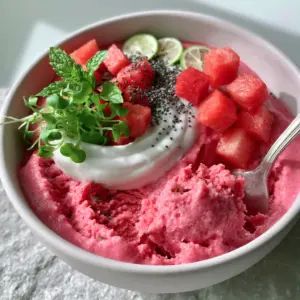
We do not recommend freezing this mousse. The cellular structure of the coconut cream and the gelatin will break down upon thawing, resulting in a grainy texture rather than a silky one. If you love chilled treats, try a watermelon smoothie bowl for a freezer-friendly alternative.
Pairing and Serving Suggestions
This rich, tropical mousse pairs beautifully with other global flavors. If you are serving an international-themed dinner, start with Egyptian recipes like Egyptian Hawawshi for a savory contrast.
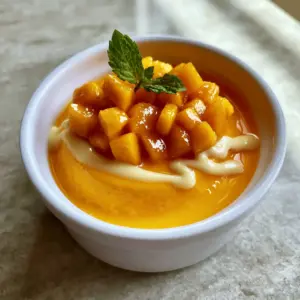
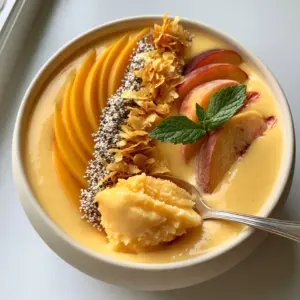
For those who enjoy a variety of textures, consider serving this alongside a small dish of Mango Pudding to showcase the fruit in different forms. If you prefer a lighter start to your day, our Peach and Mango Smoothie Bowl offers a similar flavor profile in a breakfast format.
Interestingly, the creamy nature of this mousse acts as a palate cleanser after spicy dishes. It works surprisingly well after a meal featuring cool, yogurt-based dips like Tzatziki sauce or even a refreshing Cacik.
Frequently Asked Questions
Yes! Simply swap the gelatin for 1/2 tsp of agar-agar powder and use maple syrup or agave instead of honey.
You can use thawed frozen mango for the mousse puree, but for the ‘diced mountain’ on top, fresh mango is required for the correct visual structure.
Chill your crystal glasses in the fridge for 30 minutes before filling. The temperature difference when brought into a warm room creates the beads of moisture.
Alphonso or Ataulfo (honey) mangoes are best because they are virtually fiber-free and have a vibrant orange color, ensuring a silky texture.
The coconut milk must be full-fat and chilled for at least 12 hours. If it’s too warm or a ‘lite’ version, the fats won’t separate and stabilize.
The Ultimate Silky Mango Mousse Recipe
Mango Dessert Recipe: Silky Whipped Mango Mousse with Coconut Cream
Ingredients
Equipment
Method
- Blend two mangoes until silky smooth and pass through a sieve to remove fibers.
- Sprinkle gelatin over cold water, let sit for 5 minutes, then melt until liquid.
- Whip the solid coconut cream until stiff peaks form.
- Gently fold the mango puree and gelatin into the coconut cream until no streaks remain.
- Pour into glasses, chill for 4 hours, then top with diced mango, honey, and mint.
Notes
Pass the mango puree through the sieve twice if you notice any remaining fibers.
Final Thoughts on the Ultimate Mango Mousse
This Mango dessert recipe is a testament to how simple ingredients, when treated with professional technique, can create something truly extraordinary. The combination of silky mousse, juicy Alphonso cubes, and that golden honey glint creates a dessert that is as beautiful to look at as it is to eat.
We invite you to share your creations with us! If you enjoyed this recipe, please leave a comment below and follow us on Pinterest for more culinary inspiration. Don’t forget to tag @amber_bakes in your photos so we can see your beautiful mango mountains!