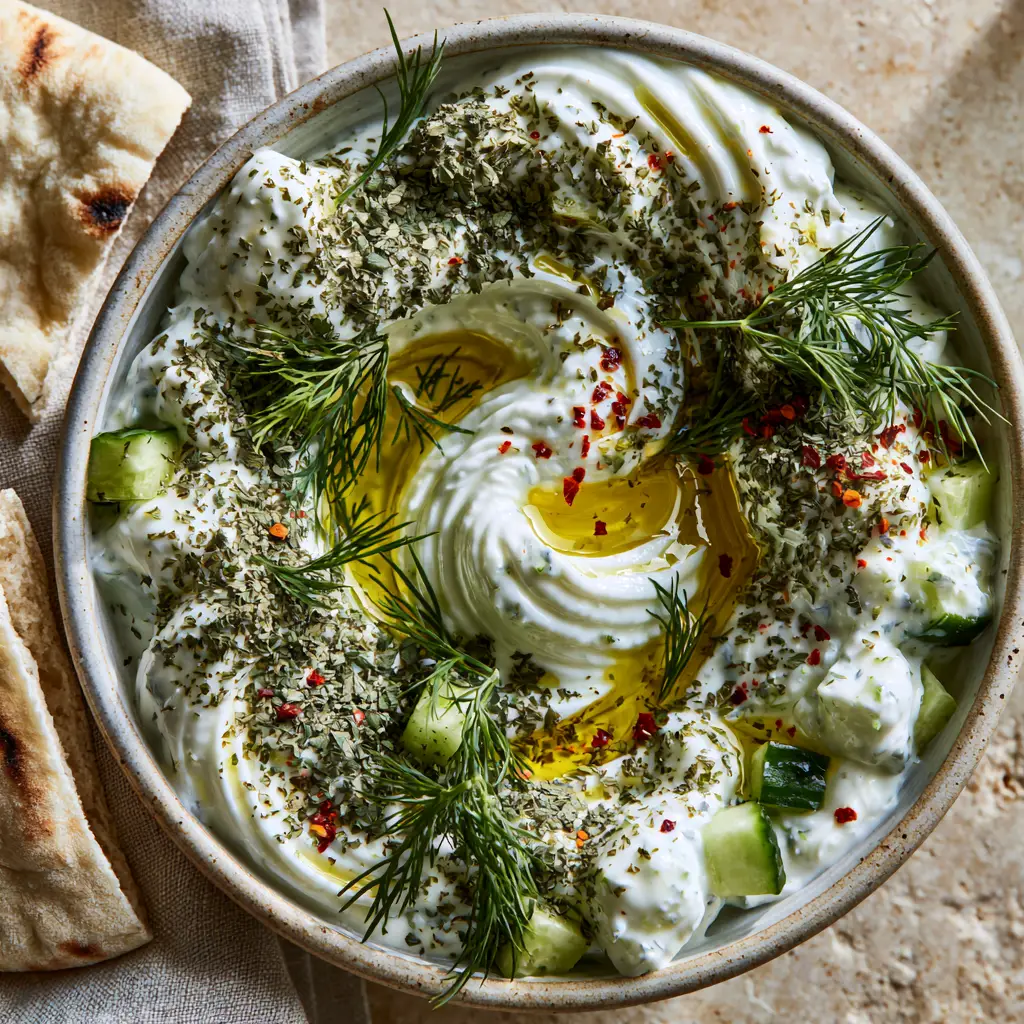
Cacik is the quintessential refreshing appetizer of Turkish cuisine, offering a cool, creamy reprieve that balances bold, savory meals perfectly. Unlike its thinner counterparts, this version focuses on a luxurious, thick texture that holds deep, swirling ridges designed to trap pools of golden extra virgin olive oil. Every spoonful delivers a harmonious blend of crisp English cucumbers, pungent garlic, and a cooling finish of dried mint and fresh dill.
Achieving the perfect bowl of Cacik requires more than just mixing ingredients; it is about the structural integrity of the yogurt and the precise preparation of the aromatics. Whether you are serving this as a dip for charred pita or a side for grilled meats, the visual appeal of vibrant green herbs against a snowy white backdrop makes it a showstopper. This recipe focuses on the thick, dip-style variation common in Turkish “Meyhane” culture, rather than the diluted soup version.
Why This Authentic Turkish Yogurt Dip Stands Out
- Textural Contrast: The combination of velvety strained yogurt and uniform, crisp cucumber cubes creates a sophisticated mouthfeel.
- Complex Aromatics: Using both dried mint powder for earthiness and fresh dill sprigs for brightness provides a multi-layered herbal profile.
- Visual Sophistication: Deep swirls and glistening oil pools make this dish look like it came straight from a professional Mediterranean kitchen.
- Perfect Pairing: While often compared to creamy Greek tzatziki sauce, the addition of Aleppo pepper and dried mint gives it a distinct Turkish soul.
Essential Components for a Velvety Base
To recreate the macro-level detail seen in artisanal food photography, you must start with the highest quality ingredients. Each element plays a specific role in both flavor and structural aesthetics.
The Dairy Foundation
You will need 2 cups (480g) of thick, strained Greek yogurt or authentic Turkish Süzme yogurt. The high fat and low water content are vital for creating the ridges that hold the olive oil; regular plain yogurt will be too runny for this specific presentation.
The Garden Elements
Use 1 large English cucumber (approximately 300g), which has thinner skin and fewer seeds than standard varieties. Finely dicing the cucumber into uniform cubes ensures they stay partially submerged in the yogurt, providing a fresh crunch without overwhelming the creaminess.
The Aromatic Garnish Trio
The visual signature of Cacik comes from 1 tbsp (2g) of dried mint powder, 2 tbsp (5g) of fresh dill fronds, and 1 tsp (2g) of Aleppo pepper flakes. The Aleppo pepper offers a mild, fruity heat and a vibrant red color that pops against the white yogurt and green herbs.
Foundational Pantry Staples
Do not overlook 2 cloves of garlic, crushed into a fine paste, and 1/2 tsp (3g) of flaky sea salt to draw out the natural sweetness of the dairy. Finally, 3 tbsp (45ml) of high-quality, golden extra virgin olive oil is required to create those iconic glistening pools in the yogurt crevices.
Professional Culinary Tools for Precision
To achieve the “handheld smartphone photo” aesthetic with professional results, you need the right gear. A sharp chef’s knife is non-negotiable for dicing the cucumbers into small, uniform cubes that don’t bruise the vegetable.
A garlic press or a mortar and pestle is essential for turning the cloves into a smooth paste, ensuring the flavor is evenly distributed without any harsh biting chunks. You will also need a shallow artisanal ceramic bowl to showcase the surface area of the dip and a pastry brush to lightly oil your pita before charring.
Step-by-Step Evolution of the Perfect Cacik
Preparing the Crisp Cucumber Base
Start by washing the English cucumber and partially peeling it in a “zebra” pattern if you desire extra color, though for this macro-shot look, finely dicing the whole cucumber (after deseeding) is best. Slice the cucumber lengthwise, scoop out the watery seeds with a spoon, and dice into uniform 1/4-inch (6mm) cubes.
Place the cubes in a fine-mesh sieve and sprinkle with a pinch of salt. Let them sit for 10 minutes to drain excess moisture; this prevents your thick Cacik from becoming watery over time, maintaining that velvety texture.
Engineering the Yogurt Ridges
In a medium mixing bowl, combine the strained yogurt with the crushed garlic paste and sea salt. Use a heavy spoon to whip the yogurt slightly until it is completely smooth but still holds its shape.
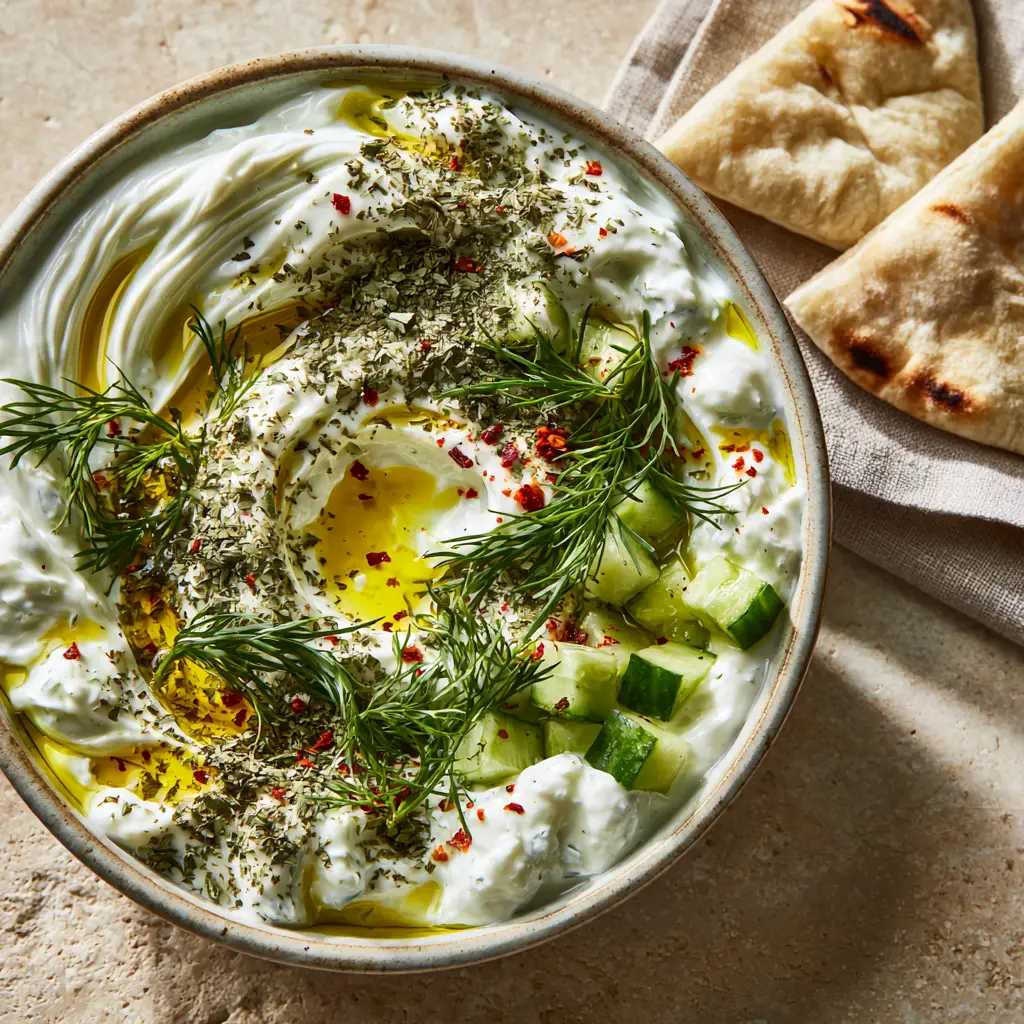
Fold in the drained cucumber cubes gently. Transfer the mixture to a shallow ceramic bowl, using the back of a spoon to create deep, concentric swirling ridges across the entire surface. These valleys are essential for the final presentation.
The Forensic Garnish Application
Slowly pour the extra virgin olive oil into the crevices of the swirls until you see glistening golden pools forming. The oil should be concentrated in the low points, highlighting the texture of the yogurt.
Dust the dried mint powder evenly across the top from a height to ensure a fine, misty coverage. Intersperse small, vibrant green dill fronds and finish with a scattering of bright red Aleppo pepper flakes for a professional, high-contrast finish.
Charring the Bread for Service
Take your pita bread triangles and lightly mist them with oil. Place them on a hot cast-iron skillet or over an open flame for 30-60 seconds per side until slight charred marks appear and the bread becomes pillowy and warm.
Expert Tips for Visual and Flavor Mastery
- Garlic Mellowing: If you find raw garlic too pungent, let the crushed garlic sit in the lemon juice or olive oil for 5 minutes before mixing it into the yogurt to take the edge off.
- Temperature Control: Always serve Cacik chilled, but ensure the pita is steaming hot. The contrast between the cold dip and warm bread is a hallmark of the experience.
- Mint Quality: Ensure your dried mint is finely powdered; large leaves will look cluttered and lack the delicate “dusting” effect described in the visual prompt.
- Submersion Technique: When adding the cucumbers, leave a few cubes visible on the surface to hint at the fresh texture hidden beneath the swirls.
Shelf Life and Storage Considerations
Cacik is best enjoyed immediately after assembly to maintain the crispness of the cucumbers and the definition of the yogurt ridges. However, you can store the yogurt and garlic base in an airtight container for up to 3 days in the refrigerator.
If storing, do not add the salt or cucumbers until just before serving, as these will release water and thin the sauce. This dip does not freeze well, as the cell structure of the cucumbers will collapse and the yogurt will split upon thawing.
What to Serve With Authentic Turkish Cacik
This dip is traditionally served as part of a meze platter. For a truly hearty meal, pair it with savory Egyptian meat-stuffed pitas where the cool yogurt cuts through the richness of the spiced beef.
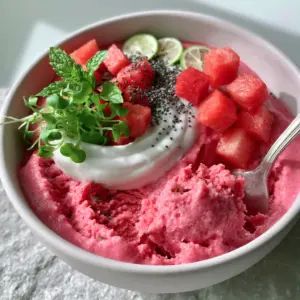
It also functions beautifully as a refreshing side for a roasted sweet potato and black bean salad, providing a creamy element to the earthy vegetables. If you are hosting a summer brunch, consider serving it alongside light fruit dishes like a refreshing watermelon bowl for a complete flavor palette.
Frequently Asked Questions
Fresh dill is highly recommended for the vibrant garnish and bright flavor profile. If you must use dried, reduce the amount to 1 teaspoon, as dried herbs are more concentrated, but note that the visual impact will be significantly different.
For English cucumbers, peeling is optional as the skin is thin. However, for a more refined texture and better color contrast, many chefs prefer to deseed them and either peel them completely or in a decorative zebra pattern.
While both use yogurt and cucumber, Cacik typically uses dried mint and Aleppo pepper, whereas Tzatziki relies heavily on lemon juice and fresh dill. Cacik can also be served as a cold soup, though this recipe focuses on the thick dip version.
Use a triple-strained Greek yogurt or Turkish Süzme yogurt with at least 5% fat. Low-fat or unstrained yogurts lack the structural protein and fat content required to hold deep swirls and support olive oil pools.
Watery Cacik usually results from skipping the step of salting and draining the cucumbers. Cucumbers have a high water content that releases over time; always drain them in a sieve for at least 10 minutes before mixing.
The Complete Cacik Recipe Card
Cacik: The Ultimate Authentic Turkish Yogurt and Cucumber Dip
Ingredients
Equipment
Method
- Deseed the English cucumber and dice into uniform 1/4-inch cubes. Place in a sieve with a pinch of salt for 10 minutes to drain water.
- In a bowl, whip the thick Greek yogurt with crushed garlic and sea salt until smooth. Gently fold in the diced cucumbers.
- Transfer yogurt to a shallow artisanal bowl. Use a spoon to create deep swirling ridges across the surface.
- Carefully pour the extra virgin olive oil so it settles into the valleys, creating glistening golden pools.
- Dust the surface with dried mint powder. Garnish with fresh dill fronds and a sprinkle of Aleppo pepper flakes.
- Toast pita triangles in a hot skillet until charred marks appear. Serve immediately alongside the chilled Cacik.
Notes
If English cucumbers aren't available, peel and deseed standard cucumbers thoroughly to avoid bitterness.

Join the Mediterranean Culinary Community
Mastering the art of Turkish Cacik is a gateway to exploring the rich, diverse flavors of the Mediterranean. This dish proves that with just a few humble ingredients, you can create a centerpiece that is as visually stunning as it is delicious. We invite you to share your results and tag us in your creations!
For more visual inspiration and recipe ideas, follow us at amber_bakes on Pinterest. If you enjoyed this recipe, please leave a comment below and let us know how your swirling ridges turned out!