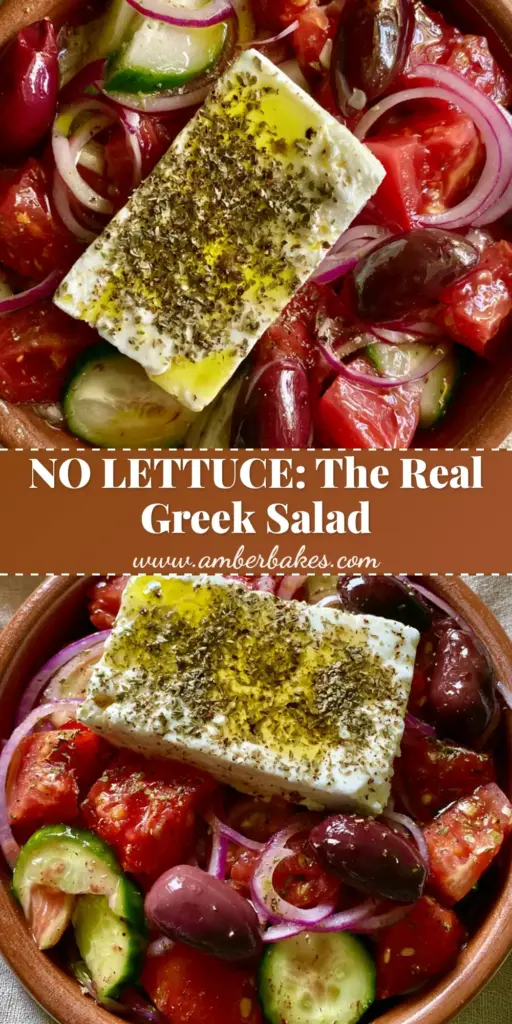
The authentic Greek salad recipe, known in Greece as Horiatiki, is a masterclass in culinary simplicity. It is a dish that relies entirely on the quality of its ingredients, celebrating the vibrant harvest of the Mediterranean summer without the filler of leafy greens.
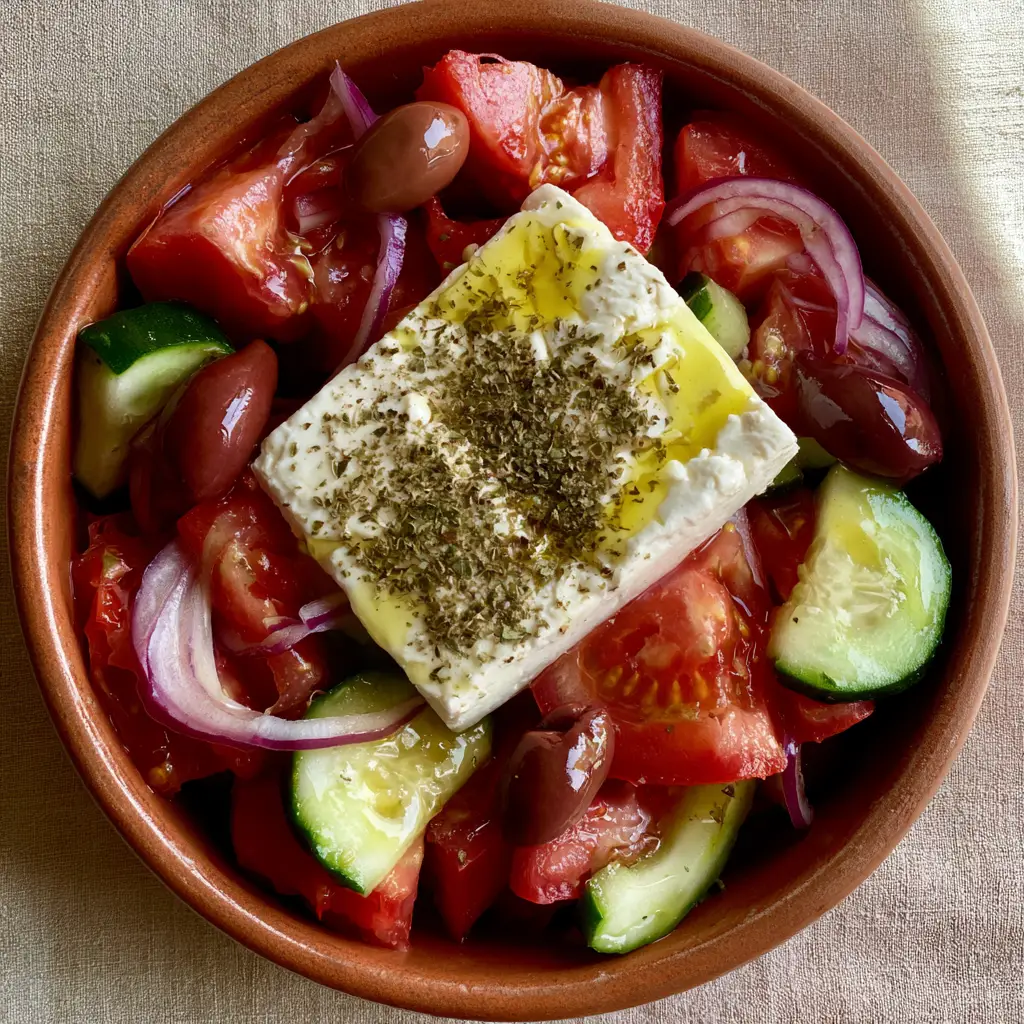
In this guide, we are recreating the exact visual masterpiece captured in a rustic terracotta bowl. Imagine deep-red, vine-ripened tomatoes, thick-cut cucumber moons, and a massive slab of creamy feta cheese glistening under a golden drizzle of olive oil.
Whether you are looking for a refreshing side dish or a light, nutritious lunch, this traditional village salad delivers a punch of flavor. It is a sensory experience defined by the crunch of partially peeled cucumbers and the savory dust of dried oregano.
The Anatomy of an Authentic Lettuce-Free Village Salad
Before we dive into the preparation, it is essential to understand what makes this Greek salad recipe truly authentic. Unlike the versions often found in western diners, a true Horiatiki never contains lettuce, radishes, or pre-mixed dressings.
- Structural Integrity: The vegetables are cut into large, irregular chunks to maintain their crunch and prevent the salad from becoming soggy.
- The Centerpiece: A massive, thick rectangular slab of creamy white feta cheese is placed directly on top, never crumbled beforehand.
- The Glistening Finish: High-quality, viscous extra virgin olive oil provides a shimmering coat to the wet tomato seeds and matte feta.
- Aromatic Heritage: A heavy dusting of dried oregano provides the earthy, floral notes that define the Aegean flavor profile.
The Pillars of a Perfect Horiatiki Ingredient List
To achieve the visual and textural standard of our blueprint, you must select ingredients with forensic precision. Each component plays a vital role in the structural and flavor balance of the dish.
Vine-Ripened Tomatoes: 4 large (800g) tomatoes. Look for deep-red fruit that is heavy for its size, ensuring juicy, shimmering seeds and a rich, sweet acidity.
Crisp Cucumbers: 1 large (300g) English cucumber. These should be cut into thick moons with partially peeled skins to provide a striking visual contrast and a satisfying snap.
Red Onion: 1/2 medium (60g) onion. Slice these into thin, translucent rings to provide a sharp bite that mellows when hitting the acidic tomato juices.
Kalamata Olives: 1/2 cup (80g) whole olives. Always use whole olives with a natural sheen; they are more flavorful and authentic than sliced canned varieties.
Premium Feta Cheese: 1 block (200g/7oz). Use a high-quality sheep’s milk feta that comes in brine for the creamiest texture and the most authentic matte finish.
Extra Virgin Olive Oil: 1/4 cup (60ml). This must be golden and viscous, acting as the “glue” that carries the flavor of the oregano across the vegetables.
Dried Oregano: 1 tbsp. This is the primary herb for a traditional Greek salad recipe, providing a high-texture dust over the feta cheese centerpiece.
Foundational Sea Salt: 1/2 tsp. Fine sea salt is required to draw out the juices from the tomatoes, creating a natural “sauce” at the bottom of the bowl.
Red Wine Vinegar: 1 tbsp (15ml). While not visually dominant, this invisible ingredient provides the necessary brightness to cut through the richness of the feta and oil.
Essential Tools for the Rustic Mediterranean Look
To mimic the handheld smartphone photo style of our visual prompt, the presentation is just as important as the preparation. You will need a few specific items to get the look right.
A rustic terracotta bowl is the traditional vessel of choice, providing a warm, earthy contrast to the deep red tomatoes. The porous nature of the clay helps keep the salad cool on a warm summer day.
A sharp chef’s knife is non-negotiable for achieving those “translucent rings” of onion and “thick-cut moons” of cucumber. Dull knives will bruise the vegetables, causing them to leak excess water prematurely.
Step-By-Step Assembly: Engineering the Visual Masterpiece
Preparing the Crimson Foundation
Start by washing your vine-ripened tomatoes and removing the cores. Slice them into large, irregular chunks rather than uniform wedges.
Place the tomatoes directly into your terracotta bowl. The goal is to see those wet, shimmering seeds exposed, which will eventually mix with the salt and oil to form a delicious dressing.
Crafting the Crisp Cucumber Moons
Take your English cucumber and peel “stripes” down the length of it using a vegetable peeler. This leaves some skin for texture and color while making the moons easier to bite.
Slice the cucumber into thick half-moons, roughly half an inch (1.25cm) thick. Toss these into the bowl with the tomatoes, ensuring they are distributed evenly but not perfectly mixed.
The Pungent and Glossy Accents
Slice your red onion into paper-thin rings. If the onion is particularly sharp, you can soak the rings in ice water for 5 minutes to mellow them before adding them to the salad.
Scatter the thin rings over the top of the tomato and cucumber base. Add the whole Kalamata olives, ensuring their glossy sheen is visible against the matte vegetables.
The Feta Monolith and Final Drizzle
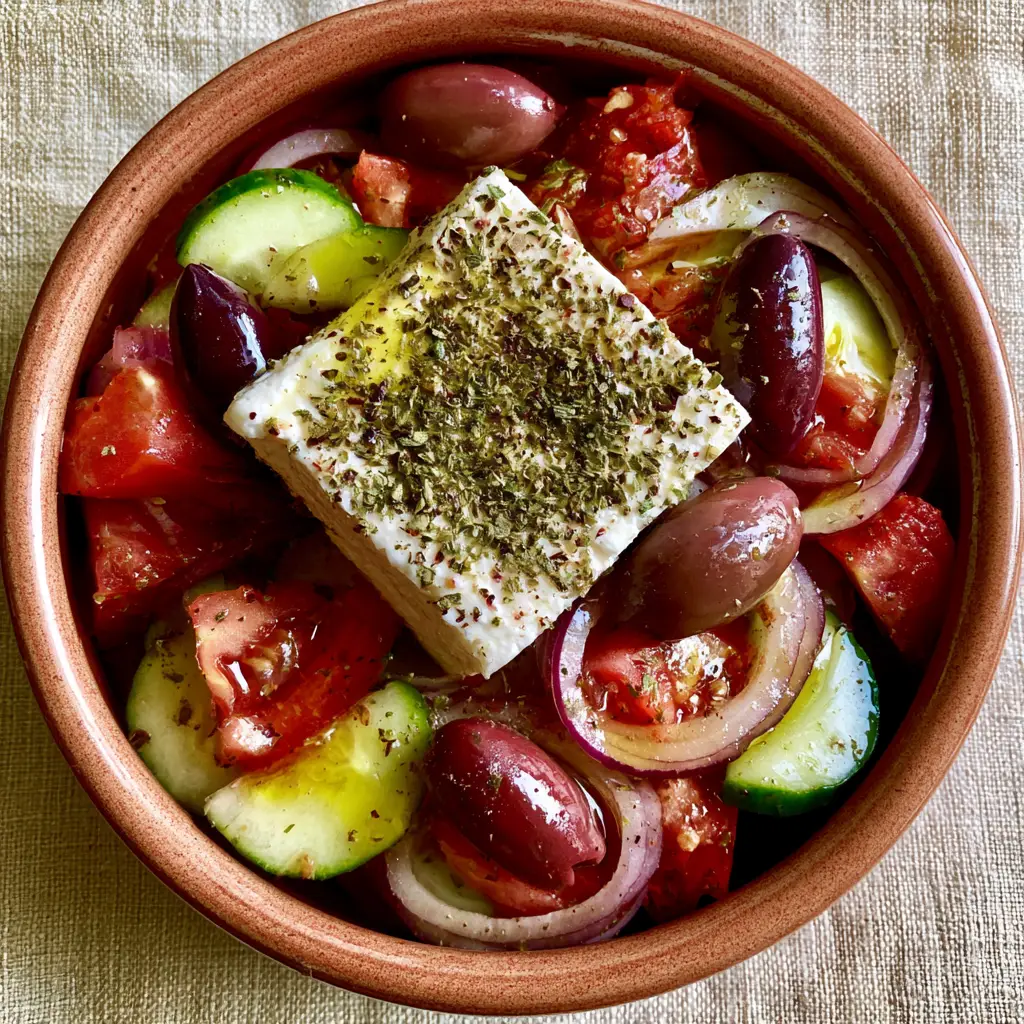
Place the massive, thick rectangular slab of feta cheese directly in the center of the bowl. Do not break it; the diner should have the satisfaction of cutting into it themselves.
Drizzle the golden, viscous extra virgin olive oil generously over the entire salad, making sure the feta and the tomato seeds are glistening. Finish with a heavy dusting of dried oregano over the feta.
Expert Tips for a Five-Star Greek Salad
- Temperature Matters: Serve the tomatoes at room temperature to maximize their flavor profile, but keep the cucumber and feta chilled until the last second for a refreshing temperature contrast.
- The Order of Salt: Salt the tomatoes and cucumbers lightly *before* adding the feta. Feta is naturally salty, so you want to season the vegetables, not the cheese.
- Oil Quality: Since this Greek salad recipe is essentially dressed in the bowl, use the best “first cold press” Greek olive oil you can find. It should have a peppery finish.
- Vinegar Choice: Never use balsamic vinegar for a traditional Horiatiki; the dark color will muddy the vibrant reds and greens of the vegetables. Stick to red wine vinegar or lemon juice.
Optimal Storage and Serving Suggestions
This salad is best enjoyed immediately after assembly. As the salt sits on the tomatoes, they will release their juices, which is delicious for dipping bread but can eventually make the cucumbers lose their snap.
If you have leftovers, store them in an airtight container in the refrigerator for up to 24 hours. Note that the feta will absorb some of the tomato juice and the oil may solidify slightly when cold.
For a full Mediterranean spread, serve this alongside crispy Greek lemon potatoes or some charred souvlaki chicken skewers. If you are hosting a summer BBQ, it also pairs beautifully with a refreshing watermelon salad.
Exploring More Mediterranean Classics
If you enjoy the fresh, bold flavors of this Greek salad recipe, you might also want to explore other regional variations. For a grain-based option, try a traditional Lebanese tabbouleh.
For those looking for more diverse inspiration, our collection of authentic Greek recipes covers everything from moussaka to spanakopita. This salad is also a fantastic side for a grilled teriyaki salmon if you want to fusion your dinner menu.
Frequently Asked Questions about Horiatiki
While you can prep the vegetables a few hours early, do not add the salt, vinegar, or oil until right before serving. Salt draws water out of the tomatoes and cucumbers, which can make the salad soggy if left for too long.
If you find red onions too pungent, slice them into translucent rings and soak them in a bowl of ice water with a splash of vinegar for 5-10 minutes. Drain and pat dry before adding to the salad.
No. In Greece, the feta is served as one large rectangular slab on top of the vegetables. This allows the diner to break off pieces as they eat, keeping the cheese creamy and preventing it from dissolving into the tomato juices.
Kalamata olives are the gold standard. They should be used whole and ideally stored in brine or olive oil. Avoid pre-sliced or canned black olives, which lack the necessary depth and ‘glossy’ texture.
Authentic Greek salad, or Horiatiki, is a seasonal summer dish meant to showcase ripe tomatoes and cucumbers. Lettuce is not traditionally grown in the Greek summer heat and is considered a filler that distracts from the high-quality produce.
The Ultimate Authentic Greek Village Salad
Greek Salad Recipe: The Authentic Horiatiki Village Salad
Ingredients
Equipment
Method
- Wash the tomatoes and cut them into large, irregular chunks. Place them in a rustic bowl, ensuring the shimmering seeds are visible.
- Partially peel the English cucumber to create a striped pattern. Slice into thick moons (1/2 inch) and add to the bowl.
- Thinly slice the red onion into translucent rings and layer them over the tomatoes and cucumbers. Add the whole Kalamata olives.
- Place the entire block of feta cheese directly on top of the vegetable mound.
- Drizzle the golden extra virgin olive oil and red wine vinegar over the entire salad. Dust the feta heavily with dried oregano and finish with sea salt.
Notes
Do not crumble the feta; the large slab is the hallmark of an authentic Greek salad recipe.
Bringing the flavors of the Greek islands to your kitchen has never been easier. This Greek salad recipe is a testament to the idea that when you have incredible produce, you don’t need to hide it behind complicated techniques.
We hope you enjoy the juicy tomatoes and creamy feta as much as we do! If you made this recipe, please leave a comment below and share your photos with us on Pinterest. For more daily kitchen inspiration, don’t forget to sign up for our newsletter.