There is nothing quite like the intoxicating aroma of Kebab Koobideh wafting from a charcoal grill. This iconic Persian dish is defined by its succulent texture, deep umami flavor, and those unmistakable finger-pressed ripples that catch the glistening meat fat.
Achieving the perfect Kebab Koobideh is often considered a rite of passage for home cooks. It requires a delicate balance of high-quality fat, meticulous temperature control, and the right technique to ensure the meat stays securely on the skewer while developing those beautiful charred, blackened edges.
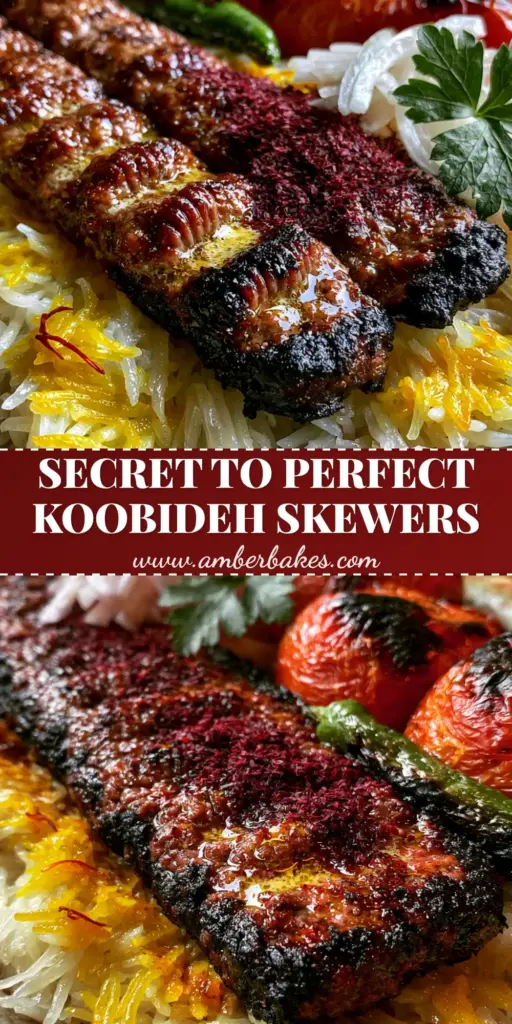
In this guide, we are recreating the exact scene from a traditional Persian kitchen: long, flat skewers resting on a bed of steaming, saffron-flecked basmati rice, served alongside blistered tomatoes and a heavy dusting of tangy sumac powder. This is more than a meal; it is a sensory experience that rivals any found in the heart of Tehran.
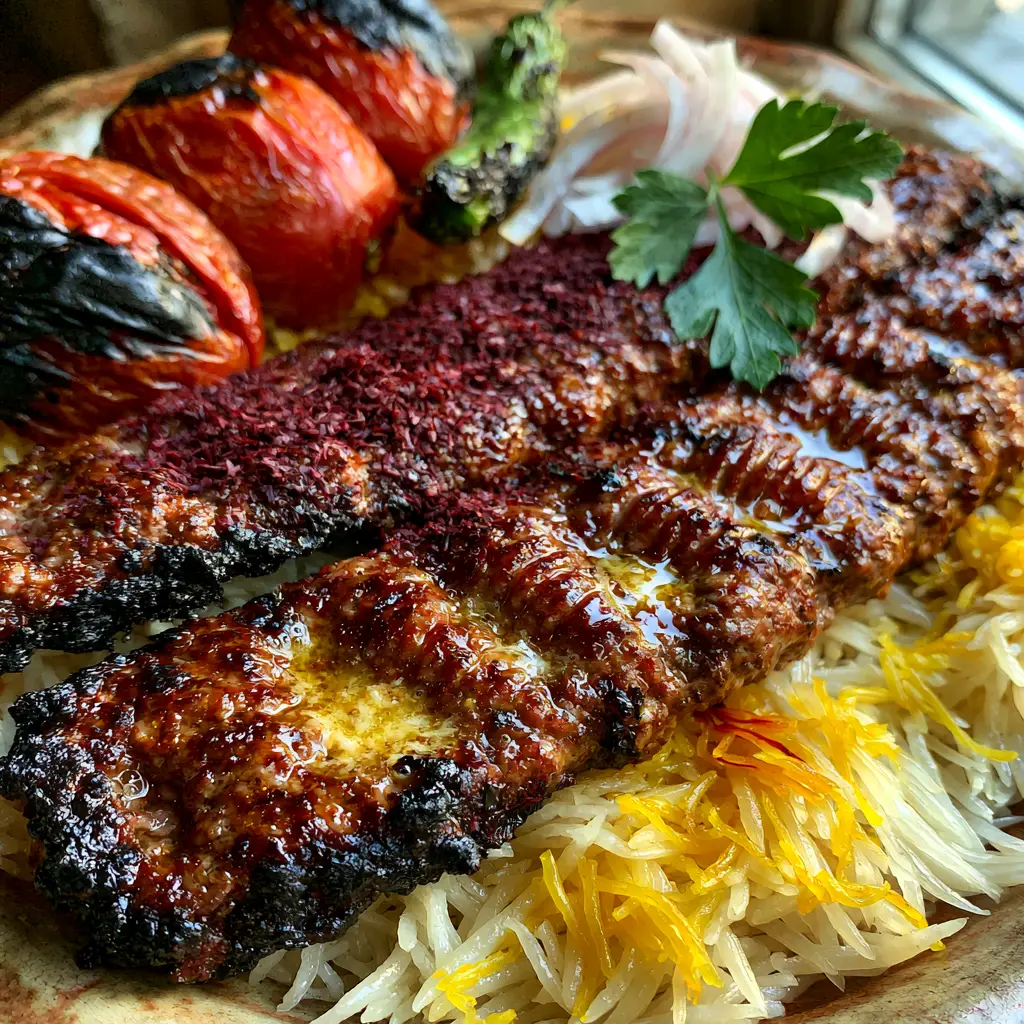
The Signature Appeal of Authentic Persian Ground Beef Kababs
- The Iconic Ripple Indentations: Those rhythmic grooves aren’t just for show; they increase the surface area for a perfect char while holding onto the juices.
- Glistening, Succulent Texture: By using a specific fat-to-lean ratio, we ensure each bite is meltingly tender and reflects light with a buttery sheen.
- Visual Contrasts: The deep burgundy of the sumac powder pops against the vibrant yellow saffron rice and the blackened skins of charred serrano peppers.
- Aromatic Depth: The combination of grated onion juice and high-quality beef creates a savory profile that is enhanced by the subtle floral notes of Persian saffron.
Essential Components for the Perfect Kebab Koobideh
To achieve the results seen in our visual blueprint, you need a combination of high-impact ingredients and foundational elements that ensure structural integrity during the grilling process.
80/20 Ground Beef (900g / 2 lbs): You need a higher fat content to achieve that “glistening” look and to prevent the meat from becoming dry and crumbly on the grill.
Grated Yellow Onions (2 medium): Onions provide the moisture and sweetness essential to the flavor, but the juice must be squeezed out to prevent the meat from sliding off the skewer.
Persian Saffron (1/2 tsp (1g) threads): Ground and bloomed in a small amount of hot water, this provides the vibrant yellow color for the rice and an unmistakable floral aroma.
Burgundy Sumac Powder (2 tbsp (12g)): This tangy, citrusy spice is the traditional finishing touch, providing a sharp contrast to the rich, fatty meat.
Extra-Long Grain Basmati Rice (3 cups (600g)): The foundation of the plate, which must be parboiled and steamed to achieve distinct, fluffy grains.
Fine Sea Salt and Ground Black Pepper: Critical for seasoning the meat deeply; do not be shy with the salt as it helps the proteins “tack” together.
Butter (4 tbsp (56g)): Melted and brushed over the skewers and rice to give the dish its final professional sheen.
Whole Vine-Ripened Tomatoes and Green Serrano Peppers: These are grilled whole until the skins are blistered and blackened for a smoky, sweet side dish.
Garnishes: One raw white onion, thinly sliced, and a generous sprig of fresh flat-leaf parsley to provide a crisp, cooling bite against the warm meat.
The Culinary Engineering: Tools of the Trade
You cannot make Kebab Koobideh with standard round bamboo skewers. To achieve the wide, flat look with finger-pressed ripples, you must use wide, flat stainless steel skewers (roughly 1-inch wide).
A charcoal grill is the preferred heat source, as the drippings from the glistening fat hit the coals, creating the smoke that flavors the meat. If grilling indoors, a heavy cast-iron stove-top griddle can work, though you will sacrifice some of that traditional char.
You will also need a fine-mesh grater or food processor for the onions and a clean kitchen towel or cheesecloth to squeeze out every drop of excess onion liquid—a step that is non-negotiable for success.
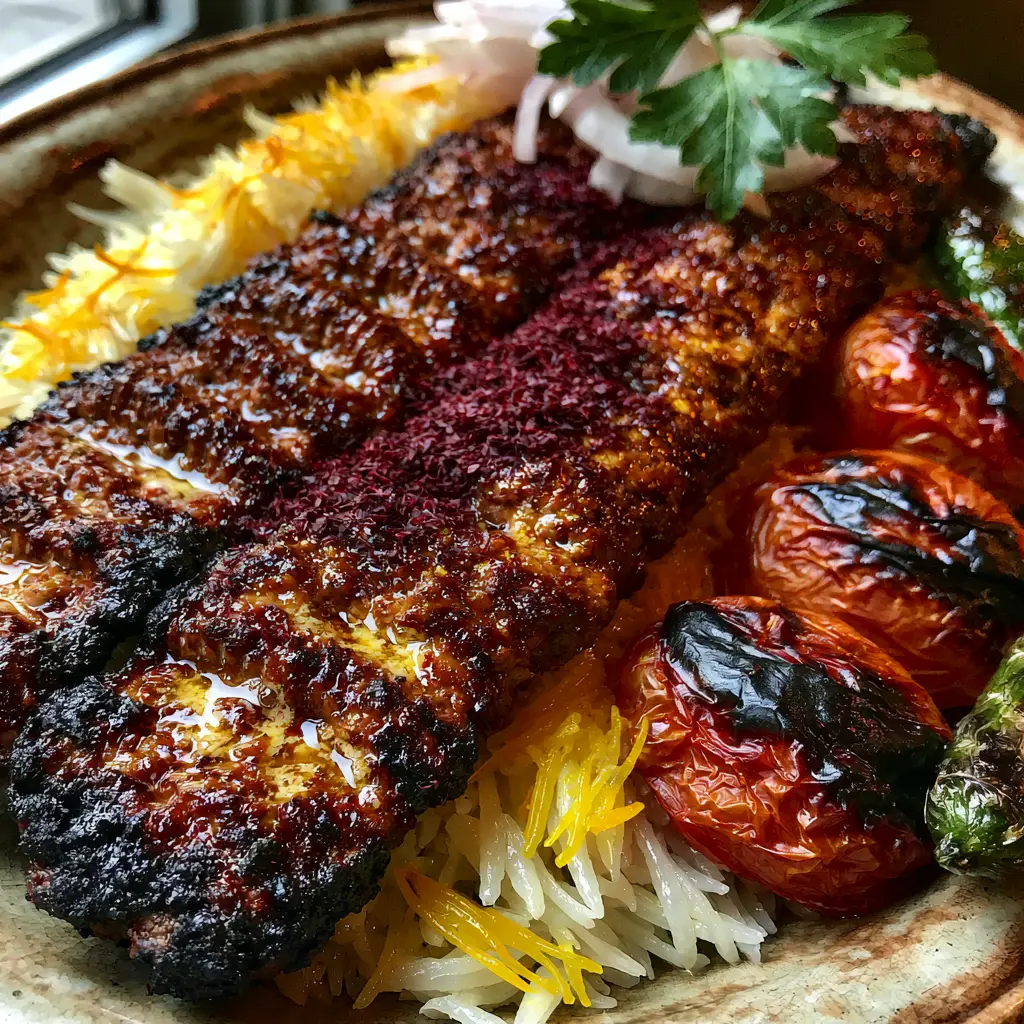
Step-by-Step Instructions for Glistening Koobideh
Preparing the Meat Base
Start by grating your onions into a bowl. Use a cheesecloth to squeeze the grated onions until they are nearly dry, reserving the juice in a separate bowl if you wish to use it for basting later.
In a large mixing bowl, combine the 80/20 ground beef with the dry onion pulp, salt, pepper, and a pinch of turmeric. Knead the meat by hand for at least 10 minutes; this “massaging” develops the proteins (myosin) which creates a tacky, paste-like texture that sticks to the skewer.
Place the meat mixture in the refrigerator for at least 1 hour. Cold meat is essential for maintaining the “finger-pressed ripples” when the meat hits the hot grill.
Threading and Shaping the Ripples
Divide the meat into equal-sized balls, roughly the size of a large orange. Wet your hands with cool water to prevent sticking.
Mold the meat around the wide, flat skewer, spreading it evenly until it covers about 8-10 inches of the metal. Use your thumb and forefinger to press down firmly at 1-inch intervals, creating the iconic rhythmic indentations.
Ensure the ends of the meat are “pinched” tightly onto the skewer. This prevents the weight of the succulent juices from causing the kabab to break apart during the first flip.
Mastering the Charcoal Grill
Prepare your grill for high heat. Place the skewers directly over the hot coals. Let them sear for 60-90 seconds until the meat “sets” and changes color from red to a grey-brown.
Flip the skewers immediately to set the other side. Continue flipping every minute to ensure the glistening meat fat renders evenly without burning, aiming for those specific charred, blackened edges seen in the visual prompt.
In the final minutes, place your whole tomatoes and green serrano pepper on the hottest part of the grill. Rotate them until the skins are blistered, blackened, and the interiors are soft and bursting.
The Saffron Rice Bed
While the meat rests for two minutes, prepare your rice plate. Lay a bed of steaming white long-grain basmati rice on a rustic ceramic dish. Scatter the vibrant yellow saffron-infused grains over the top for a striking visual contrast.
Place the hot skewers directly onto the rice, allowing the juices to soak into the grains. Dust the meat heavily with burgundy sumac powder for that authentic tart finish.
Expert Tips for Perfect Meat Texture
- The Temperature Rule: Keep the meat ice-cold until the very second it touches the skewer. If the fat begins to melt from the heat of your hands, the kebab will fall off.
- The Onion Secret: If your meat is too wet, add 1 tablespoon of chickpea flour to act as a binder without altering the flavor profile.
- The Salt Science: Salt the meat early in the kneading process. This helps the meat fibers bind together, creating that springy, professional texture found in Middle Eastern grilled meats.
- Visual Cues: Watch for the fat to bubble on the surface of the meat. This “glistening” is your sign that the interior is juicy and ready to be pulled from the heat.
Storage and Reheating Advice
Kebab Koobideh is best enjoyed fresh from the grill while the fat is still hot and fluid. However, if you have leftovers, store the meat and rice in an airtight container for up to 3 days.
To reheat, avoid the microwave as it can make the beef rubbery. Instead, wrap the kababs in foil with a small pat of butter and heat in a 350°F (175°C) oven for 10 minutes. This preserves the succulent texture and keeps the rice from drying out.
Perfect Pairings for Your Persian Feast
This dish is the centerpiece of a traditional spread. For a full experience, consider serving it alongside other regional favorites. The bright acidity of an Asian-inspired cabbage salad or a traditional Shirazi salad provides a refreshing counterpoint to the rich beef.
For those looking to expand their repertoire of Iraqi and Persian-style recipes, this kebab pairs beautifully with warm flatbreads like freshly baked manakeesh or as part of a larger traditional Arabic breakfast spread if you have leftover grilled tomatoes and onions.
Frequently Asked Questions
While a charcoal grill is traditional for the ‘charred’ look, you can use a broiler. Place the skewers on a rack over a baking sheet and broil on high, turning frequently.
Yes, sumac provides the essential tart, citrusy finish that cuts through the richness of the beef fat, completing the authentic flavor profile.
An 80/20 ratio (80% lean, 20% fat) is ideal. The fat provides the glistening appearance and prevents the skewers from drying out under high heat.
You must use wide, flat stainless steel skewers. Round or thin skewers cannot support the weight of the ground beef or allow for the signature ripple indentations.
This usually happens if the onion juice wasn’t fully squeezed out or if the meat wasn’t kneaded long enough to develop the protein ‘tackiness.’ Ensure the meat is very cold when skewering.
Authentic Kebab Koobideh with Saffron Rice
Kebab Koobideh: The Ultimate Guide to Juicy Persian Ground Beef Skewers
Ingredients
Equipment
Method
- Grate the yellow onions and use a cheesecloth to squeeze out all excess liquid. The onion pulp must be dry to ensure the meat adheres to the skewers.
- In a large bowl, combine the ground beef, dry onion pulp, salt, pepper, and turmeric. Knead by hand for 10 minutes until the mixture is tacky and cohesive. Chill for 1 hour.
- Divide meat into 4 portions. Mold around wide flat skewers. Use fingers to press rhythmic ripple indentations along the length of the meat.
- Place over high charcoal heat. Sear for 1 minute per side to set. Continue grilling, flipping frequently, until the meat is glistening with charred edges and tomatoes are blistered.
Notes
Ensure the skewers are cold before molding the meat to maintain those iconic ripples.
The Ultimate Middle Eastern Comfort Food
Kebab Koobideh is a testament to the beauty of simple ingredients handled with expert technique. From the charred serrano peppers to the saffron-stained rice, every element on the plate serves a purpose in creating a balanced, high-protein masterpiece.
We would love to see your results! If you manage to capture those perfect finger-pressed ripples, share your photos with us. Be sure to follow us on Pinterest for more inspiration on Middle Eastern kofta variants and traditional Arabian-style dining.