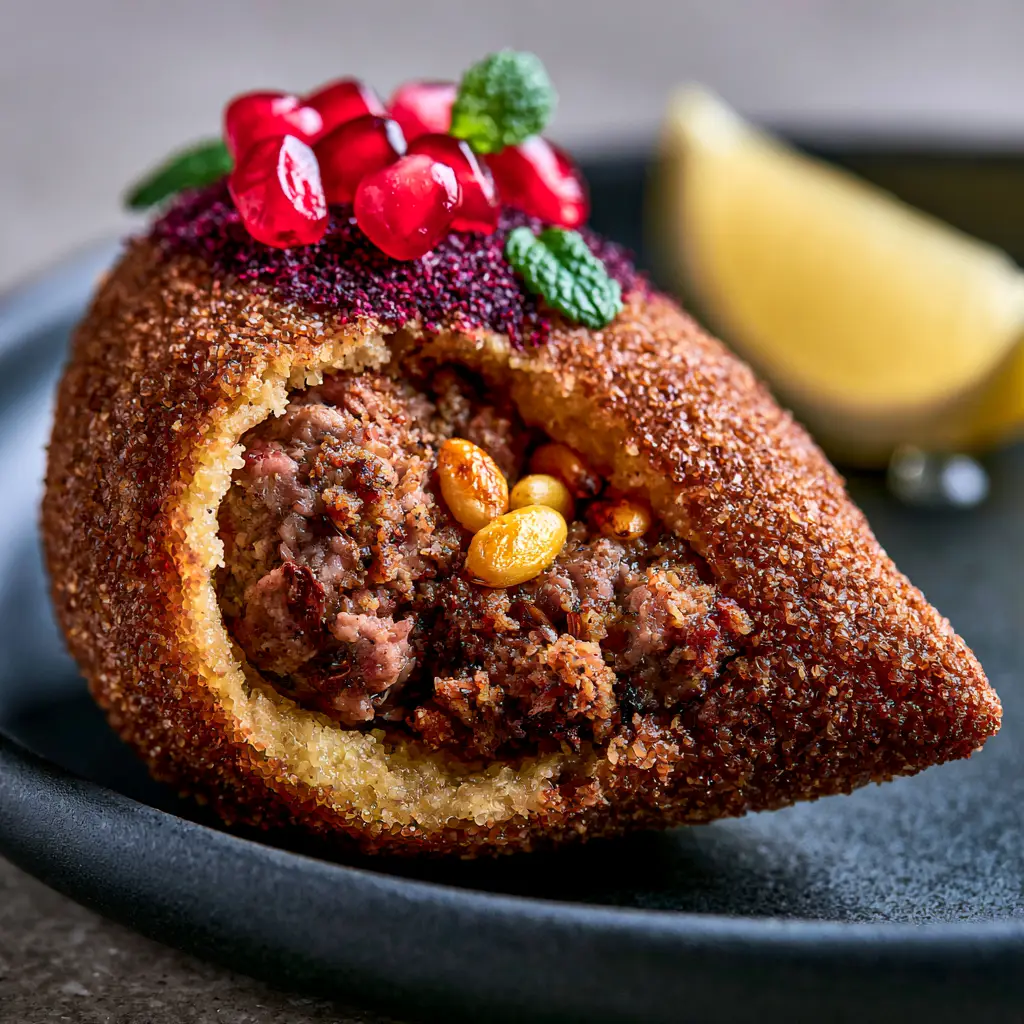
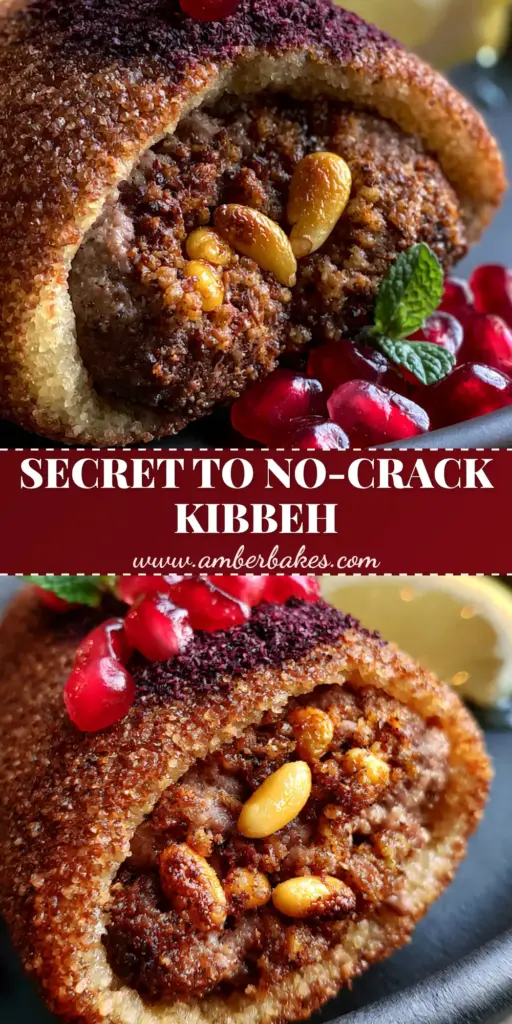
Experience the definitive crunch of authentic Stuffed Bulgur Balls, known traditionally as Kibbeh. This recipe delivers a paper-thin, golden-brown crispy bulgur crust that snaps between your teeth to reveal a steaming, aromatic center of juicy minced lamb and buttery pine nuts.
Achieving that iconic torpedo shape and grainy, intensely crunchy exterior requires a blend of culinary precision and the right ingredients. We are diving deep into the forensics of the perfect fry, ensuring your kitchen smells of warm allspice, cinnamon, and toasted nuts.
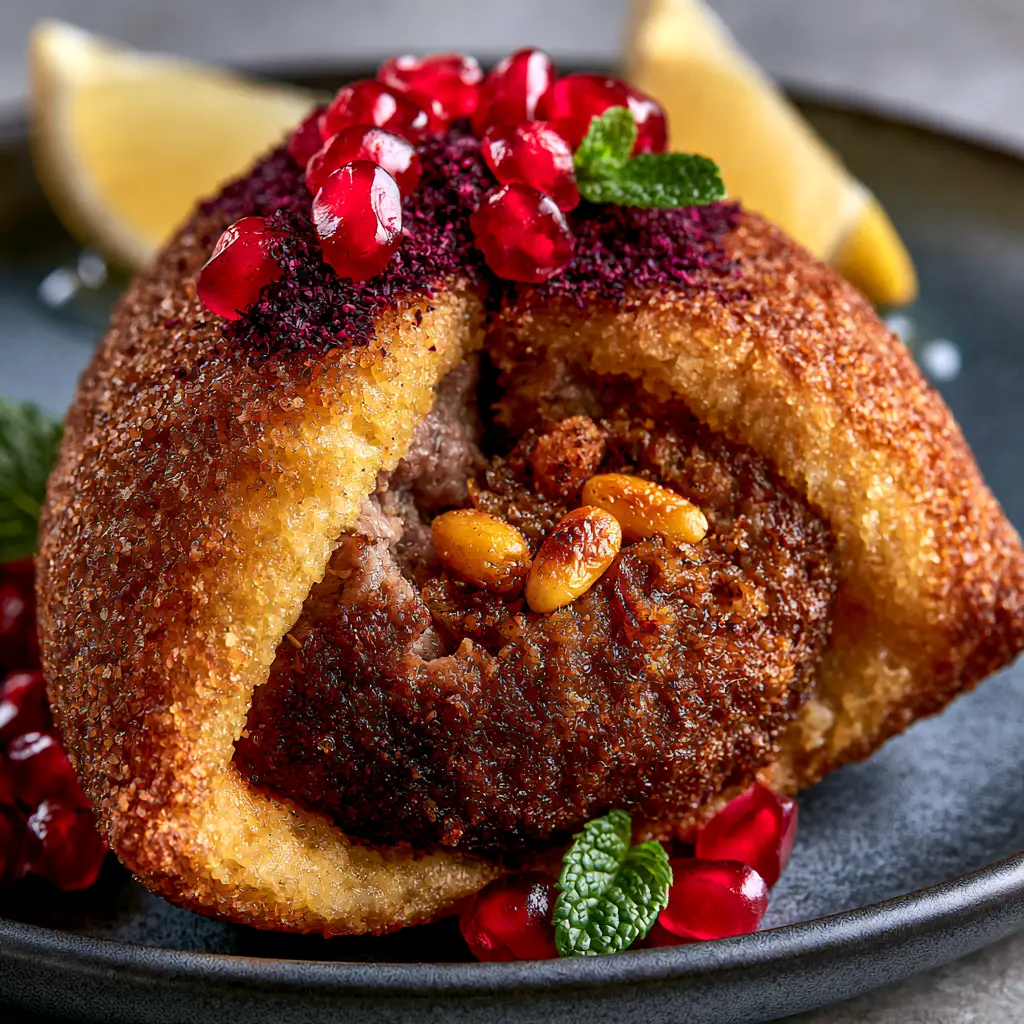
Whether you are serving these at a festive gathering or as a gourmet snack, the contrast between the dark purple sumac dusting and the vibrant red pomegranate seeds makes this dish a visual masterpiece. Let’s master the art of the perfect Levant-style bulgur croquette.
Why These Golden Stuffed Bulgur Balls Are a Culinary Masterpiece
- The Snap Factor: A meticulously hydrated fine bulgur shell that achieves a “shattering” crispness when deep-fried.
- The Flavor Profile: A complex savory-sweet balance provided by ground lamb, toasted pine nuts, and a final hit of tart pomegranate.
- Visual Sophistication: Garnished with fresh mint sprigs and sumac for a high-end restaurant presentation.
- Authentic Texture: A grainy, rustic exterior that contrasts perfectly with the succulent, steaming interior filling.
The Essential Components for a Perfect Bulgur Crust and Filling
To recreate the exact visual and textural results from our blueprint, you need specific grades of ingredients. Using the wrong bulgur or a meat with the wrong fat content will result in a shell that cracks or a filling that is dry.
Fine Bulgur (#1 Grade): You must use 2 cups (400g) of extra-fine bulgur wheat. This fine grain hydrates quickly into a dough-like consistency, allowing you to form that signature paper-thin shell without it falling apart in the oil.
Ground Lamb (Lean for the Shell, Fatty for Filling): You will need 1 lb (450g) of extremely lean lamb for the dough and 1 lb (450g) of 80/20 lamb for the filling. The lean meat binds the bulgur, while the fattier meat ensures the interior remains “steaming and juicy” as described in our visual prompt.
Toasted Pine Nuts: Use 1/2 cup (65g) of pine nuts, toasted until they reach a deep golden-brown. These provide a buttery crunch and an essential fatty element to the spiced lamb center.
The Spice Quadfecta: A combination of 1 tsp (5g) ground cinnamon, 1 tsp (5g) allspice, 1/2 tsp (2.5g) ground cloves, and 1 tbsp (15g) ground sumac. These create the aromatic “hashweh” scent that defines the dish.
Foundational Liquid & Fat: You will need ice-cold water for kneading the dough and 4 cups (950ml) of a high-smoke-point neutral oil (like grapeseed or vegetable oil) for deep frying. The ice water prevents the lamb fat in the dough from melting prematurely, ensuring a crispier shell.
Specialized Tools for Success
To achieve the “torpedo-shaped” results of a professional chef, a few tools are indispensable. A food processor is necessary to emulsify the lamb and bulgur into a smooth, pliable paste that won’t crack.
A heavy-bottomed Dutch oven or deep fryer is required to maintain a consistent oil temperature of 350°F (175°C). For the garnishing stage, a sharp paring knife is essential for creating those clean, glistening lemon wedges and finely plucking the mint sprigs.
Step-by-Step Instructions for the Perfect Crunch
Preparing the Signature Hashweh Filling
Start by heating a splash of oil in a skillet over medium-high heat. Add your fattier ground lamb, breaking it apart with a wooden spoon until it begins to brown and release its juices.
Stir in your finely diced onions and cook until translucent. Fold in the toasted pine nuts, cinnamon, allspice, and salt, cooking until the mixture is fragrant and the lamb is fully browned. Allow this mixture to cool completely; a warm filling will tear the delicate bulgur shell.
Creating the Paper-Thin Bulgur Shell
Rinse the fine bulgur in a fine-mesh sieve and squeeze out every drop of excess moisture. Combine the hydrated bulgur with the lean ground lamb, a grated onion, and a pinch of salt in a food processor.
Pulse the mixture, adding 1 tbsp (15ml) of ice water at a time, until it forms a smooth, tacky dough that holds its shape. The texture should feel like modeling clay—smooth enough to thin out, but sturdy enough to hold the lamb filling.
Shaping the Iconic Torpedoes
Keep a bowl of ice water nearby to dampen your hands. Take a golf-ball-sized piece of dough and use your index finger to poke a hole, rotating the ball in your palm to thin out the walls until they are paper-thin.
Stuff the cavity with 2 teaspoons of the cooled lamb and pine nut mixture. Pinch the ends to seal, smoothing the surface with damp fingers to create the classic pointed “torpedo” shape without any visible seams or cracks.
The Art of the Deep Fry
Heat your neutral oil to 350°F (175°C). Carefully lower 3-4 bulgur balls into the oil at a time—do not overcrowd the pot, or the temperature will drop, resulting in greasy shells.
Fry for 4-6 minutes until the exterior is a deep, uniform golden-brown. You are looking for a grainy, intensely crunchy visual cue. Drain on a wire rack rather than paper towels to maintain the airflow and crispness.
Expert Tips for Professional Results
- The Ice Water Secret: Always keep your hands cold when shaping; this prevents the dough from sticking and helps “polish” the exterior for a smoother fry.
- Temperature Control: If your oil is too cold, the kibbeh will soak up grease; if it’s too hot, the outside will burn before the interior is steaming. Use a thermometer!
- Resting the Dough: Let your bulgur dough rest for 30 minutes in the fridge before shaping. This allows the gluten to relax and the bulgur to fully hydrate.
- Seam Stress: Ensure there are zero cracks before frying. A single tiny fissure will cause the ball to “explode” or leak filling into the oil.
The Best Way to Store and Reheat
Stuffed Bulgur Balls are best enjoyed immediately, but they can be stored in an airtight container in the fridge for up to 3 days. To maintain the crunch, never use a microwave for reheating.
Instead, place them in an oven or air fryer at 375°F (190°C) for 5-8 minutes until the interior is hot and the shell recrisps. You can also freeze them raw; place the shaped torpedoes on a baking sheet to flash-freeze, then transfer to a bag for up to 3 months.
What to Serve With Stuffed Bulgur Balls
These crispy delights are the star of any Levantine spread. They pair beautifully with a cool yogurt-based dip or a zesty Lebanese cabbage salad to cut through the richness of the lamb.
For a full Arabian recipes experience, serve them alongside ful medames or as part of a massive Arabic breakfast recipes platter. If you’re looking for more meat-centric dishes, they are a natural companion to a Lebanese kafta burger or traditional kebab koobideh.
Frequently Asked Questions
While you can bake them at 400°F (200°C) brushed with oil, you will not achieve the ‘intensely crunchy’ and ‘grainy’ texture described in the visual blueprint. Frying is essential for the authentic result.
Yes! You can shape the balls and keep them refrigerated for 24 hours or freeze them for up to 3 months. Always fry them straight from the fridge or freezer for the best snap.
You must use #1 Fine Bulgur. Coarser grades (#2, #3, or #4) will not form a cohesive dough and will result in a crumbly, thick shell that falls apart.
Cracking usually happens if the bulgur dough is too dry or if the filling was still warm when stuffed. Ensure you use ice water while kneading the dough and let the filling cool completely.
Master the Stuffed Bulgur Balls Recipe
Stuffed Bulgur Balls: The Ultimate Crispy Lebanese Kibbeh Recipe
Ingredients
Equipment
Method
- Sauté ground lamb and onions in a skillet until fully browned and juices are released.
- Fold in toasted pine nuts, cinnamon, and allspice. Cool completely before stuffing.
- In a food processor, blend fine bulgur, lean lamb, and grated onion with ice water until a smooth, tacky paste forms.
- Form golf-ball-sized spheres, hollow out the center with your finger, fill with hashweh, and pinch ends to form a torpedo.
- Fry in 350°F (175°C) oil for 4-6 minutes until deep golden-brown and grainy.
- Top with sumac, pomegranate seeds, and mint. Serve with fresh lemon wedges.
Notes
Use only #1 fine bulgur for the correct crust texture.
Closing & Call to Action
Mastering Stuffed Bulgur Balls is a rite of passage for any serious home cook. The combination of the shatteringly crisp shell and the aromatic, juicy lamb filling creates a sensory experience that is truly unmatched in Middle Eastern cuisine.
If you enjoyed this deep dive into culinary forensics, please leave a comment below and tell us how your torpedoes turned out! Don’t forget to follow me on Pinterest and share your creations with the community.